
Tick Control for Your Yard in the Roanoke and Smith Mountain Lake Area
Finding ticks on the kids after they play outside, or pulling them off the dog every week, is a sign your property needs tick control for yards. Moorman’s Wildlife Management & Pest Control treats the places ticks wait for a host in yards across Roanoke, Smith Mountain Lake, Lynchburg and the New River Valley. Call (540) 494-8278 and we’ll walk your property, find the tick zones and explain how to cut them down.
- Office617 Middle Valley Rd, Hardy, Virginia
- Phone(540) 494-8278
- Service areaSouthwest Virginia, including Roanoke, Lynchburg and Smith Mountain Lake
Where Ticks Wait in a Yard
Ticks avoid hot, dry, open grass. They gather where it is cool, humid and sheltered, and where small mammals and deer pass through.
- Leaf litter and ground cover under trees and shrubs
- Tall grass and unmowed fence lines
- Wood edges where the lawn meets the forest
- Stone walls, brush piles and woodpiles that shelter mice
- Playground and trail edges near wooded lots
These are the areas that count when we walk a property.
Lyme Disease and Alpha-Gal Syndrome
Different ticks carry different problems. Blacklegged ticks, also called deer ticks, can spread the bacteria that cause Lyme disease. Early signs can include fever, headache, fatigue and a spreading rash, though not everyone gets the rash.
The lone star tick is linked to alpha-gal syndrome, an allergy that can develop after a bite and cause reactions to red meat and some other mammal-derived products, often several hours after eating. Other tick-borne illnesses also occur in Virginia. See a health provider if you develop symptoms after a bite, and ask your veterinarian about protecting dogs.
Tick Checks for People and Pets
Treatment may lower tick numbers, but it does not replace personal precautions such as daily tick checks, which are how ticks that get through are caught. A nymph can be as small as a poppy seed, so look carefully.
- Check scalp, behind the ears, armpits, waistband, behind the knees and groin
- Shower soon after coming inside and run clothes through a hot dryer
- Run your hands over pets, including paws, ears, collar and tail
- Remove an attached tick with fine-tipped tweezers, pulling straight out with steady pressure
Skip petroleum jelly and matches. They do not help.
How a Yard Barrier Treatment Works
A barrier treatment is applied to the places where ticks actually live and travel, rather than sprayed evenly over the whole lawn. That means the transition zone between woods and grass, shrub lines, leaf litter, ground cover and stone walls.
The goal is to cut the number of ticks that make it into the areas your family uses. Products are applied according to label directions, and guidance on precautions for children and pets is provided before and after service. It does not replace tick checks, veterinarian-recommended pet preventives or other personal precautions, such as repellent used as directed on its label, but it may help lower the odds of a bite.
Tick Seasons in Southwest Virginia
Ticks are active for much of the year, but different stages peak at different times.
- Spring: blacklegged nymphs, the stage most often tied to Lyme disease, become active
- Summer: lone star ticks and American dog ticks are common, and tiny larvae can cluster in groups
- Fall: adult blacklegged ticks seek hosts as the weather cools
- Mild winter days: some adults may still be active when temperatures rise above freezing
If treatment is planned, its timing depends on the inspection findings and the product label.
Yard Changes That Lower Tick Numbers
Small habits make the biggest difference alongside treatment. Mow regularly, rake leaf litter from the edges of the lawn, and trim low branches so more sunlight reaches the ground.
Where lawn meets woods, a strip of wood chips or gravel creates an uninviting edge for ticks. Stack firewood neatly off the ground and away from the house, move swing sets and seating areas away from the tree line, and keep bird feeders from drawing rodents close. Each step reduces the places ticks and their hosts can hide.
Tick Control Treatment Examples
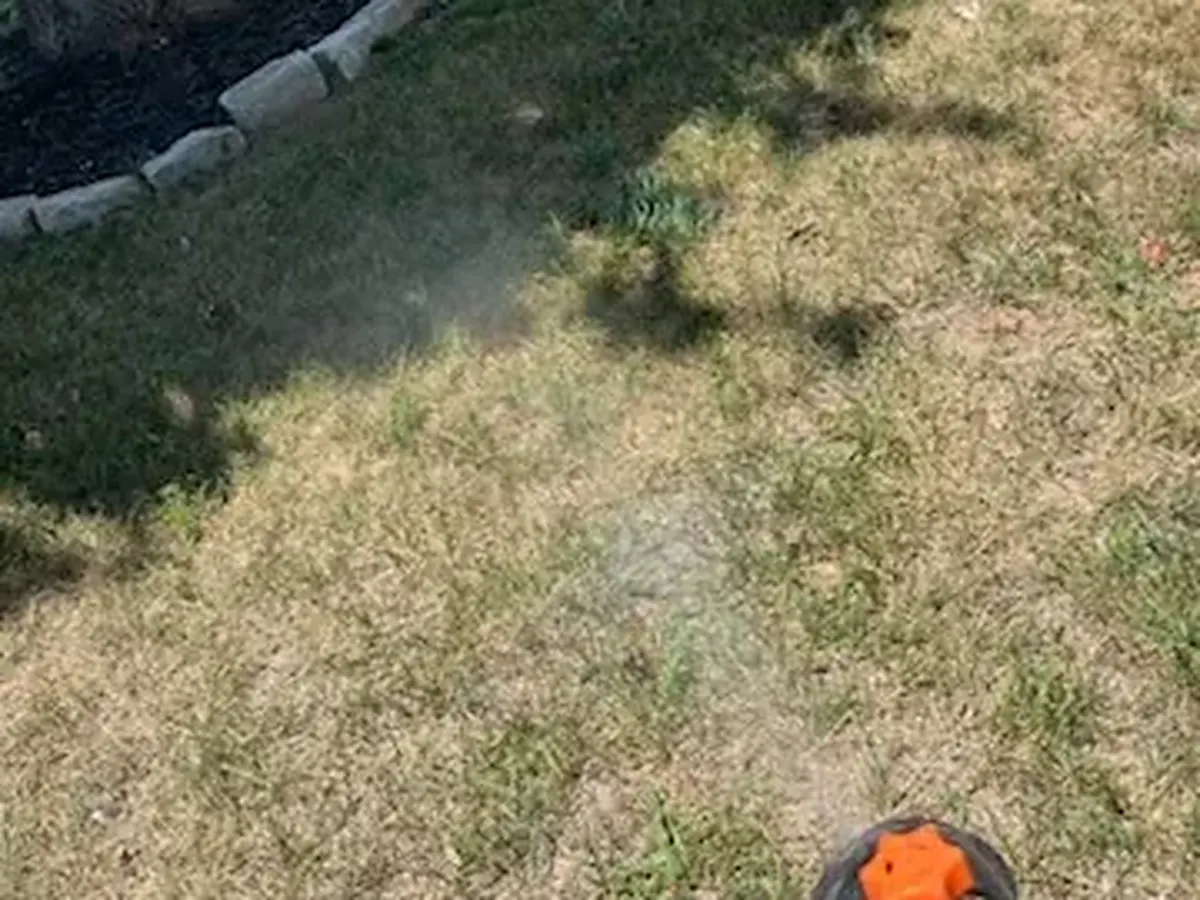
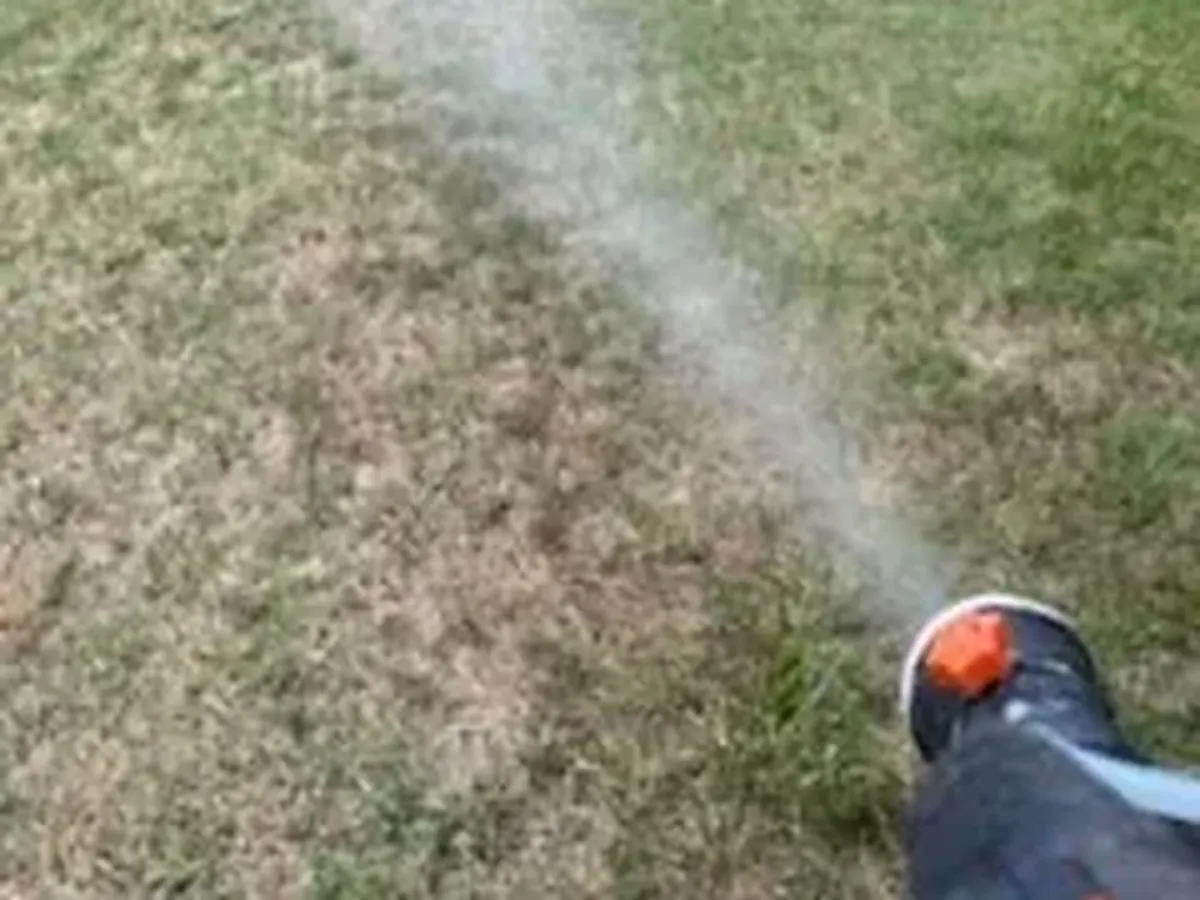
Moorman’s Wildlife Management & Pest Control field photos: a lawn treatment (left) and a yard treatment (right).
Where ticks hide in your yard
Most ticks aren’t sitting in the middle of a short, freshly mowed lawn. They wait in taller grass, brush and leaf litter for a person or animal to walk by.
The hot spots are usually:
- The edge where lawn meets woods, brush or a field
- Leaf litter under trees and along fences
- Tall grass and overgrown shrubs, especially along trails and property lines
- Shady beds and ground cover next to the house
- Brush piles left near the house or play areas
- Shady woods where deer are common, the favorite habitat of blacklegged ticks
Ticks we see in Southwest Virginia
Only a few kinds of ticks commonly bite people here.
- Blacklegged tick (deer tick). Lives in leaf litter in shady woods, especially where deer are common and at higher elevations in the mountains. Its nymphs are smaller than 1/16 inch, cause most cases of Lyme disease and are most active in late spring and early summer, while adults are out in fall, early spring and on warm winter days.
- Lone star tick. An aggressive biter found throughout Virginia, mostly at lower elevations, in leaf litter and partly shaded grass. The adult female has a white spot on her back. Its bite can lead to alpha-gal syndrome, a red meat allergy.
- American dog tick. Prefers sunny, open areas like trail edges, medium-height grass and shrubby spots. Adults are most active from early spring to midsummer.
How tick control works
1. Inspect the property
We walk the yard to find the edges, shade, leaf litter and wildlife paths where ticks gather. We also look at where kids play and pets rest.
2. Treat the tick zones
Tick spraying for yards focuses on the borders and shady areas, not the whole open lawn. We treat the woodline, fence lines, shrub beds, ground cover and the places pets and children use most.
3. Change the habitat
Small changes make ticks less comfortable:
- Keep grass mowed and shrubs trimmed
- Rake out leaf litter near the house and play areas
- Remove brush piles, or move them far from where people walk
- Keep play areas away from the brushy, overgrown edges where ticks wait
- Stack woodpiles off the ground and away from the house, which also keeps mice from settling close by
If mice are already nesting in sheds or the crawl space, ask about rodent control too.
4. Plan for new arrivals
Ticks keep moving in from the woods and fields around a yard, so one treatment will not keep a yard clear for the whole warm season.
Protecting kids and pets from ticks
Yard treatment helps, but each person and pet still needs protection.
For your family
- Use a repellent with DEET, picaridin, IR3535, oil of lemon eucalyptus, PMD or 2-undecanone on skin and clothing
- Don’t use repellent on babies under 2 months, and don’t use oil of lemon eucalyptus or PMD on children under 3
- Treat shoes, socks and outdoor clothes with 0.5% permethrin, or buy them pre-treated
- Walk in the center of trails and avoid brushing through tall grass
- Shower soon after coming in, and check the whole body, using a mirror for hard-to-see spots
- Dry outdoor clothes on high heat
For your pets
- Ask your veterinarian about a tick product that fits each pet
- Check pets for ticks every time they come in from the yard or a hike
- Keep pets out of treated areas until the treatment has dried
If you find a tick attached
Grab it with fine-tipped tweezers as close to the skin as you can and pull straight up with steady pressure. Don’t twist, jerk, squeeze or crush it, and skip nail polish, petroleum jelly or a hot match. Clean the bite and wash your hands. If you get a rash or fever in the weeks after a bite, see your doctor and mention when and where you picked up the tick.
Questions we hear
Which ticks in Virginia are linked to Lyme disease and alpha-gal syndrome?
Blacklegged ticks, or deer ticks, can transmit Lyme disease. The lone star tick is associated with alpha-gal syndrome. Other species, like the American dog tick, can carry different diseases.
How long does a tick have to be attached to spread Lyme disease?
For Lyme disease, a blacklegged tick generally needs to be attached for about 36 to 48 hours before the bacteria are likely to pass on, but other tick-borne germs can pass more quickly, which is why daily checks and prompt removal matter. Talk with a health provider about any tick bite or symptoms.
What is the safest way to remove a tick?
Grasp it close to the skin with fine-tipped tweezers and pull straight out with steady pressure. Clean the area afterward and note the date, in case symptoms develop.
Do ticks live in the lawn or only in the woods?
Mostly along the edges. Short, sunny lawn is hard on ticks, but they gather in leaf litter, tall grass, shrub lines and stone walls at the border of a lawn.
Do my pets still need tick preventives if the yard is treated?
Yes. Pets roam beyond the yard, so ask your veterinarian about a tick preventive. Yard treatment works alongside it, not in place of it.
How much does tick control cost?
The price depends on yard size, how much wooded edge you have and how many treatments the yard needs, so the number comes after we’ve seen your woodline and beds.
Do ticks come back after a yard treatment?
Fresh ticks keep coming in from surrounding woods and fields, so no yard stays tick-free on its own. Mowing, clearing leaf litter and keeping brush back from play areas keep the numbers lower between treatments.
Is tick spraying safe for my kids and pets?
Keep kids and pets off treated areas until the treatment dries, and bring toys and pet bowls inside before we start.
When is tick season in Virginia?
Ticks are most active from about March through October. Some species, like the blacklegged tick, can bite on warm winter days too, so it pays to check for ticks year-round.
Related Services
Request an inspection
Schedule Tick Control Today
If you have wooded edges, stone walls or pets that keep coming in with ticks, call and tell us about the property. We will inspect the cover where ticks wait and recommend a treatment plan.
Send us the details
Thank you, we have your request
We will call or write back to set up your inspection. If it cannot wait, call (540) 494-8278.
Find us on Google Maps
Moorman’s Wildlife Management & Pest Control
617 Middle Valley Rd, Hardy, VA 24101
(540) 494-8278