
Rodent Exclusion in Southwest Virginia: Seal Mice and Rats Out of Your Home
Droppings in the silverware drawer, scratching in the wall at night or a bag of birdseed chewed open in the garage: mice or rats have found a way in, and traps alone won’t close it. Rodent proofing for homes means looking for every gap a mouse or rat can use and sealing it with material they can’t easily chew.
Moorman’s Wildlife Management & Pest Control seals homes against rodents around Roanoke, Smith Mountain Lake and the towns between. Call (540) 494-8278, and we’ll look the house over from the roofline to the crawl space and show you where they are getting in.
- Office617 Middle Valley Rd, Hardy, Virginia
- Phone(540) 494-8278
- Service areaSouthwest Virginia, including Roanoke, Lynchburg and Smith Mountain Lake
Why Control Alone Is Often Not Enough
Trapping reduces the mice or rats in the building, but it does not change how they got in. As nights cool in fall, more rodents head for the same unsealed gaps. Exclusion helps keep the numbers from climbing again, which is why it is done alongside or right after control.
Mice Need Very Little Room
A mouse can fit through a gap about the width of a pencil. That means the openings that matter are often ones that look too small to bother with: space around a pipe, the corner under a door, the seam where siding meets the foundation.
Because the gaps are so small, finding them takes a slow, close inspection of the exterior and the areas just inside, such as the crawl space and utility rooms.
Rats Chew Through Weak Materials
Rats gnaw wood, plastic, expanding foam, caulk and thin aluminum, so a patch made of any of these can be undone quickly. Rats also dig, and where one has burrowed along a foundation or slab the repair has to go deeper than the visible hole.
For rats we use metal and heavy galvanized mesh.
Foundations, Utility Lines and Vents
Some of the most common rodent entries are low on the house and easy to miss:
- Gaps where pipes, cables and gas lines pass through a wall
- Cracks and missing mortar in the foundation, and gaps where framing meets masonry
- Dryer and exhaust vents with missing or damaged covers (any guard must suit the equipment and not restrict airflow)
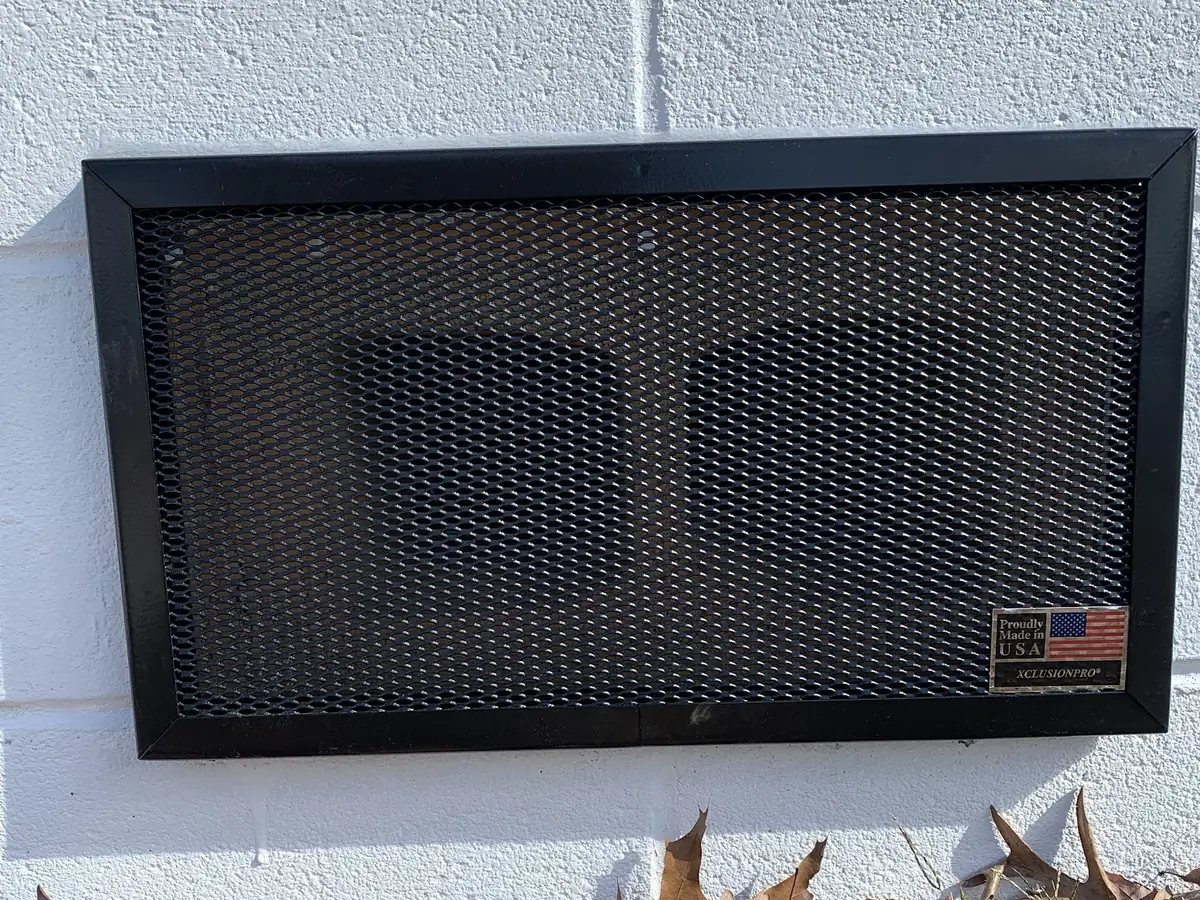
- Torn or missing screens on foundation vents
Each is closed with material matched to the opening. See entry point sealing for the methods by opening type.
Garage Doors and Crawl Spaces
A garage door with a worn bottom seal or gaps along the sides is an open invitation, and so is a crawl space access door that no longer fits. We replace or reinforce the weak parts and close the gaps with chew-resistant material.
Crawl spaces get extra attention because they connect to wall cavities and the floor system. Vents, access doors and plumbing penetrations are checked together. Vent repair is part of fine-gap exclusion: a vent only helps keep mice out if its screen is intact and its frame meets the wall tightly, so torn screens and gaps around the frame are repaired along with the vent itself, while keeping the airflow the vent is meant to provide. For vent screens that need replacing, see foundation vent repair.
Fall Timing and Keeping Watch
Sealing before nights turn cool helps, since rodents often start looking indoors then. The openings exist year-round, so exclusion can be done at other times too.
Afterward, keep an eye out for fresh droppings or new gnawing near sealed spots, and keep firewood, stored items and thick shrubs away from the walls. If new signs show up, a re-check will tell us whether a gap was missed or a new one has opened.
Rodent Exclusion: What It Looks Like
Rodent Exclusion Service Areas
Roanoke · Lynchburg · Blacksburg · Martinsville · Lexington · Smith Mountain Lake · and surrounding communities
The gaps mice and rats use
How small they can go
A mouse needs a hole only a little over a quarter inch wide, about the size of a pencil. A rat can get through a gap just over half an inch. Both will chew a smaller crack until it fits them.
Low on the house
- Where water, gas, electric and cable lines pass through the wall
- Gaps between the foundation and the siding
- Under exterior doors and the side door to the garage
- Worn bottom seals on overhead garage doors
- Crawl space vents with torn screens and loose access doors
Higher than you’d expect
Rats climb almost any rough wall, shimmy up the inside of a pipe and use downspouts to reach the gutters and roof. A rat can jump about three feet straight up, and a mouse about half that. That is why rodent proofing also checks soffits, roof returns and roof vents.
Inside the house
The same gaps show up inside: under and behind kitchen cabinets, behind the stove and refrigerator, around pipes under sinks and the washer, and where the floor meets the wall. Fireplaces, floor vents and dryer vents are worth checking too.
How we rodent proof a home
Inspect
We go around the outside, into the attic and crawl space and through the kitchen, laundry and garage. Droppings and gnawing show us the busiest routes.
Seal
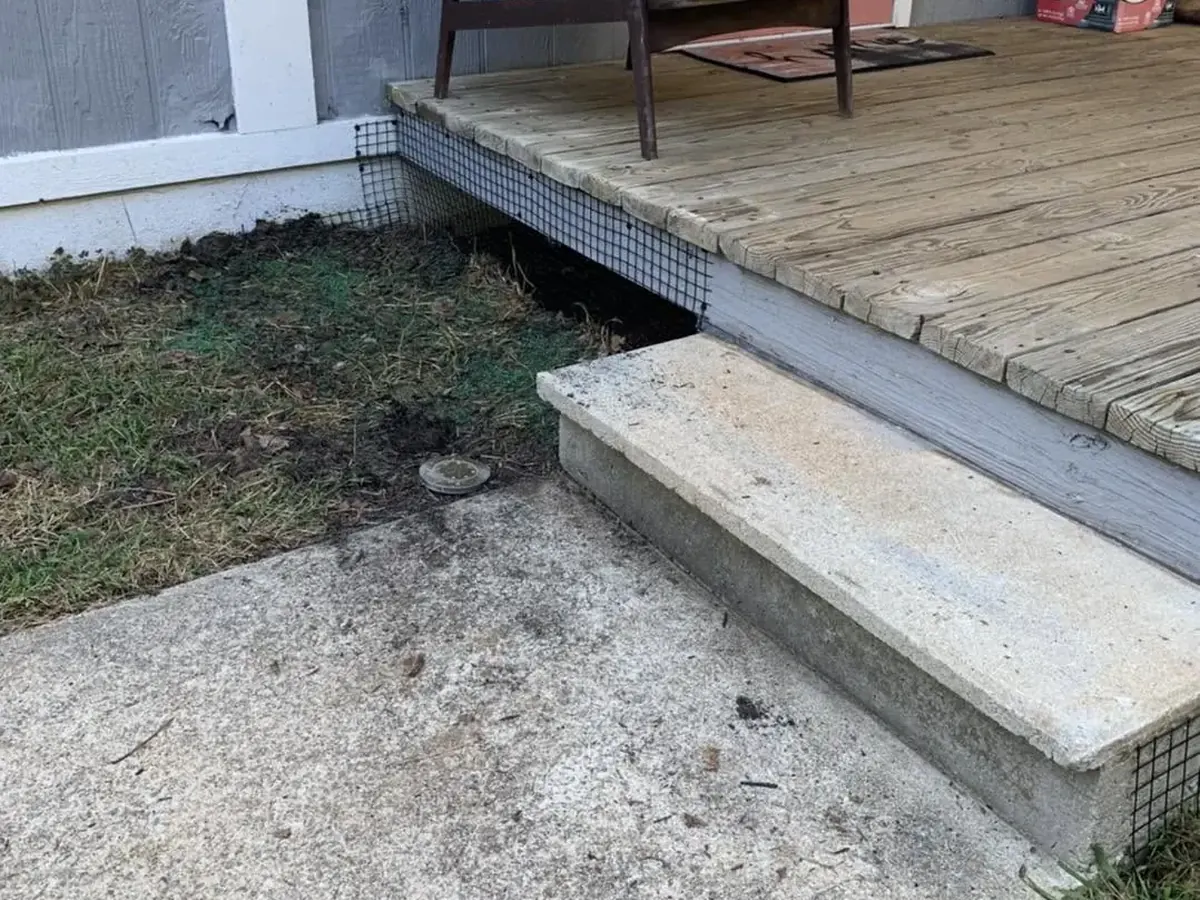
Hardware cloth with quarter-inch mesh handles mice, half-inch mesh of heavier wire stops rats, and sheet metal covers wider gaps. Small holes are packed with steel wool and held with sealant.
Fix the doors
The gap under an exterior door should be a quarter inch or less. A worn sweep or threshold is replaced.
Check the outside
We point out woodpiles, overgrown shrubs, open feed and other things that draw rodents close to the walls.
The job follows the same steps each time: get the rodents out, seal the gaps they used and repair the damage found.
Ground-level work for other animals is on our entry point sealing page, and crawl space vent covers have their own page.
Related Guides
- Rodent-Proofing Your Home: Keep Mice and Rats Out
Questions we hear
How small a gap can a mouse use?
About the width of a pencil. That is why even small cracks, pipe gaps and door-edge spaces are worth closing.
Can rats chew through caulk and spray foam?
Yes. Soft sealants and foam are easy for rats to gnaw out, so they are backed with metal or heavy mesh wherever rats are a concern.
Where do mice and rats most often get into a house?
Low openings are common: utility line gaps, foundation cracks, garage door edges, crawl space doors and unscreened vents. Rodents can also use roof-level gaps, so the exterior is checked all the way up.
Does the time of year matter when sealing against rodents?
Sealing before fall helps, since cooler nights often push mice and rats indoors. Sealing at other times still helps, since the openings are there year-round.
If I have rodents inside now, do I still need traps or bait?
Probably. Sealing keeps new animals out, but those already inside need to be dealt with. That part is covered by our rodent, mouse and rat control services, and the two are usually planned together.
How much does rodent proofing cost?
It depends on how many gaps the house has and how hard they are to reach. After the inspection, we give you a price for the full job.
How long does rodent proofing take?
Many homes can be sealed in one visit. Larger homes, deep crawl spaces or a lot of roofline work can take longer.
Is rodent proofing safe for my kids and pets?
Yes. Sealing uses mesh, metal and sealants. If any trapping is part of the job, traps go where children and pets can’t reach them.
Is steel wool enough to keep mice out?
Steel wool works for small holes when it is packed tight and held in with sealant. Bigger gaps need hardware cloth or sheet metal. Steel wool can also rust and stain, which matters on light siding.
What does rodent proofing a house include?
Rodent proofing for homes means finding every gap a mouse or rat can use and sealing it with material they can’t chew. So we also check soffits, roof returns and roof vents.
Request an inspection
Request a Rodent Exclusion Inspection
If you have found droppings, gnawing or a gap you cannot explain, tell us where. We will inspect the building, show you the openings and explain how each should be closed.
Send us the details
Thank you, we have your request
We will call or write back to set up your inspection. If it cannot wait, call (540) 494-8278.
Find us on Google Maps
Moorman’s Wildlife Management & Pest Control
617 Middle Valley Rd, Hardy, VA 24101
(540) 494-8278