
Wildlife exclusion near Roanoke and Smith Mountain Lake
Something was living in your attic, the crawl space smells wrong, or you just found a chewed hole at the roofline. The animal is only half of the problem. The opening has to be closed as well, or the next animal can move in.
Moorman’s Wildlife Management & Pest Control does this work from our base in Hardy. Pick the opening or the animal below.
- OwnerZakk Moorman, wildlife biologist
- Occupied openingsSealed only after clearance is confirmed
- ScopeRoofline to foundation
- Based inHardy, VA
Removal deals with today, exclusion deals with the house
Removal takes care of the animals that are in the structure now. Exclusion works on the building: it closes the ways animals get into attics, crawl spaces, chimneys, rooflines and wall cavities. Trapping or deterrents alone leave the weak spots in place. Most lasting fixes use both, in that order.
If animals are still inside, see wildlife removal first.
Close the openings in the building
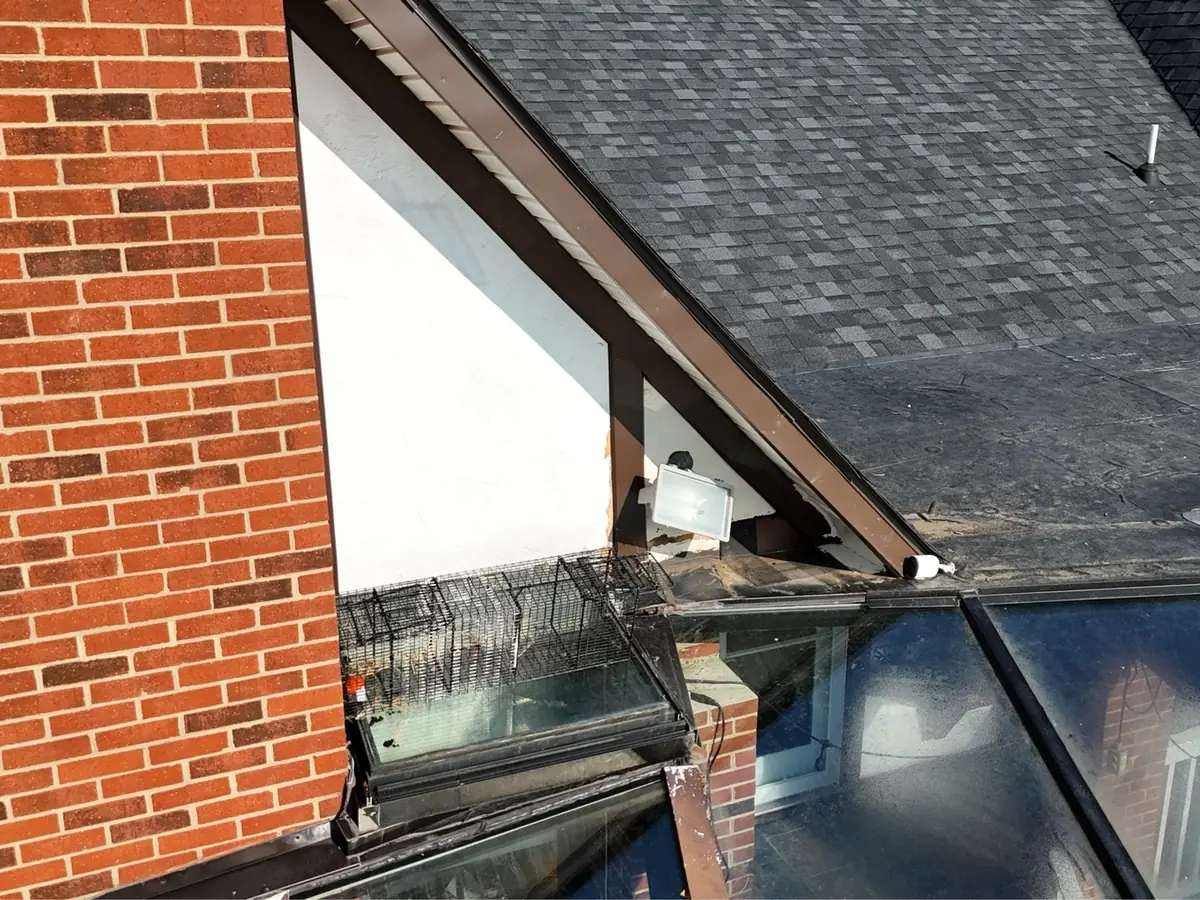
Gaps at the roofline and foundation, a chimney without a cap, vents with torn screens, and the space under a deck or porch.
Keep a particular animal out
Squirrels and raccoons chew and pull at weak points, and mice need only a small gap, so the materials are matched to the animal.
When exclusion is the right next step
- Animals keep coming back after removal
- You hear scratching or movement in the walls or ceiling
- Vents, soffits or roof edges look damaged or loose
- You want to stop a problem before it starts
The season decides some of the timing
Squirrels nest in attics most in late winter and early spring, and again in late summer and fall. Raccoons den in attics and chimneys, especially in spring when raising young. Mice and rats come indoors as the nights cool. Bat colonies are off limits for sealing in May through August; see bat removal.
Wildlife exclusion questions
Is exclusion humane?
It is designed to stop entry without harming the animal. When animals are inside we check for young first, and one-way devices let them leave on their own. Where an animal has to be handled directly, the species rules decide how.
Can exclusion be done at any time of year?
Often, but not always. Bats are the main exception, because May through August is off limits for closing a colony out. Other species limit timing too, which is why we identify the animal first.
Does exclusion involve repairs to the house?
Sometimes. Where soffits, fascia, vents or trim are damaged, they may need reinforcing so the exclusion materials stay secure.
Will animals come back?
Openings sealed with metal are very hard for animals to get through. A storm, a falling limb or a new roof can still open a new gap, so it helps to look over the roofline after big weather.
How much does it cost?
Two houses of the same size can need very different work, so every house is priced after we see it. The number of openings, the roof height and pitch, whether animals are still inside, and how much rotted wood must be replaced all matter.
Request an inspection
Schedule an exclusion inspection
If animals keep returning, or you want to stop a problem before it starts, we inspect the whole structure and walk through the options that fit your house.