
Raccoon Removal for Attics, Chimneys and Crawl Spaces in Southwest Virginia
Moorman’s Wildlife Management & Pest Control is a raccoon removal company serving Roanoke and Smith Mountain Lake, along with the rest of Southwest Virginia. Heavy thumps over the ceiling after dark, a torn soffit or a mess on the deck every morning usually mean a raccoon has moved in.
An adult raccoon can peel back shingles, rip a soffit panel loose or push a vent cover into the attic. Our raccoon removal service covers attics, chimneys, crawl spaces and decks. Call (540) 494-8278 and we’ll find the entry, check for young, get the raccoon out and rebuild the opening so it holds.
- Office617 Middle Valley Rd, Hardy, Virginia
- Phone(540) 494-8278
- Service areaSouthwest Virginia, including Roanoke, Lynchburg and Smith Mountain Lake
Why Raccoons Are a Problem
Raccoons are intelligent, highly adaptable animals that frequently enter attics, chimneys, soffits, rooflines and crawl spaces in search of shelter. They are primarily active at night and, being larger and stronger than squirrels, can cause significant damage when gaining access:
- Damaged electrical wiring, which can create a fire hazard
- Destroyed insulation and nesting contamination in the attic
- Torn soffits, vents, shingles and roof decking to force entry
- Strong odors and droppings left behind in attics or crawl spaces
- Repeat infestations when entry points are not sealed after removal
Trapping Alone Is Not a Fix
Trapping alone does not address entry points and often leads to repeat infestations. If raccoons are damaging your home, waiting can increase the cost and risk. Exclusion addresses the root problem by letting the animal leave and closing the ways back in.
Our Raccoon Removal Process
Inspection and Assessment
We thoroughly inspect your property to locate entry points, identify existing damage, check whether a mother and young may be present, and understand raccoon activity patterns before recommending a plan.
Exclusion
We check for kits before any exclusion work. Kits depend completely on the mother for about 8 to 10 weeks, so if young are present we change the plan, for example by delaying one-way exclusion until the kits can travel or by handling the mother and kits together in accordance with Virginia wildlife regulations, so the family is not separated or sealed in. When no dependent young are inside, one-way exclusion devices let raccoons leave on their own and help prevent them from re-entering while the job is completed.
Structural Reinforcement & Sealing
Once the attic or chimney is confirmed clear, the identified access points are sealed and reinforced with heavy-duty materials chosen to stand up to a raccoon’s strength.
Cleanup and Restoration Recommendations
We provide recommendations for cleanup and restoration when needed, addressing attractants and vulnerable areas to reduce the risk of future wildlife problems.
Wildlife exclusion work is planned in line with Virginia wildlife regulations and seasonal guidelines. Our goal is to protect your property while respecting wildlife and delivering results you can trust.
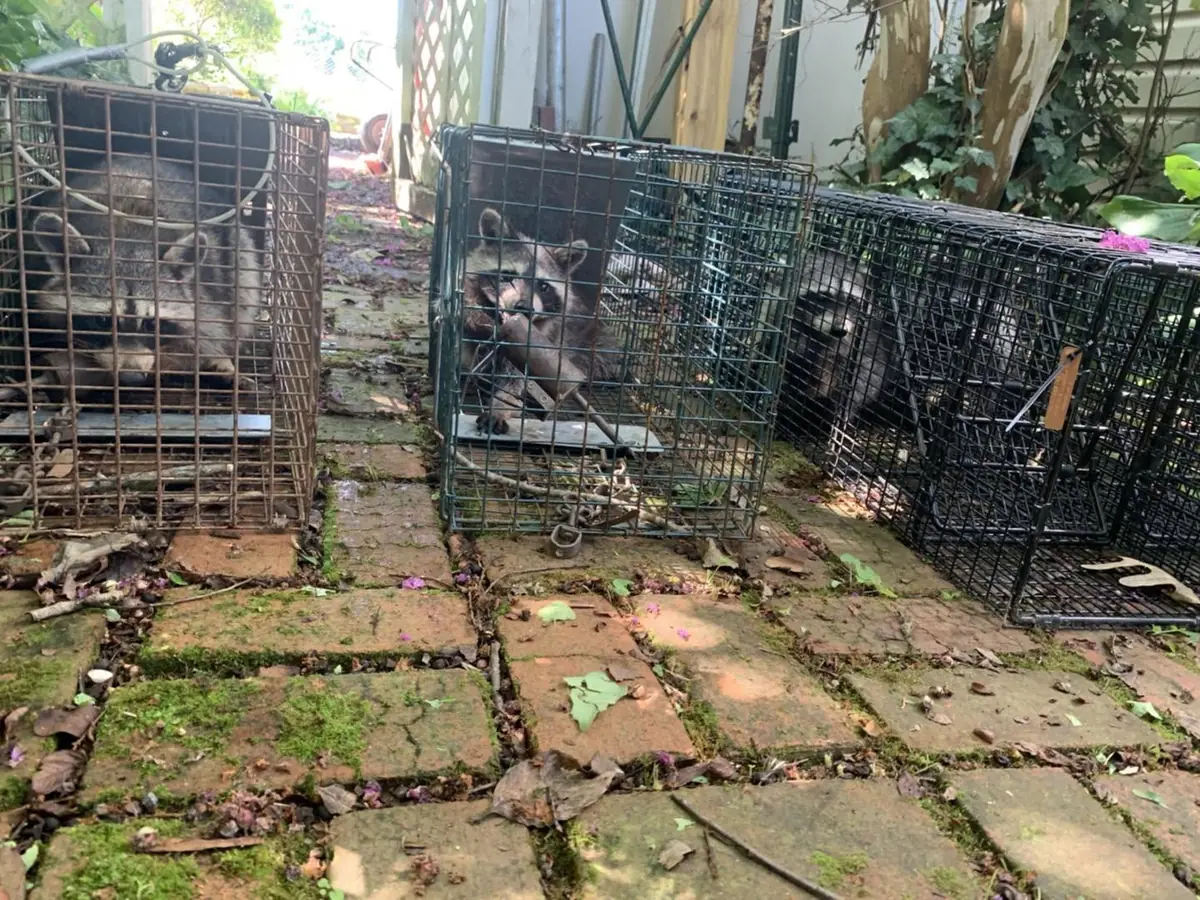
Raccoon Removal & Exclusion: What It Looks Like
Raccoon Removal Service Areas
Hardy · Roanoke · Salem · Smith Mountain Lake · and surrounding Virginia communities
Where We Offer Raccoon Removal
Raccoon Removal at Smith Mountain Lake, VA · raccoon removal in Hardy, VA · raccoon removal in Moneta, VA · raccoon removal in Rocky Mount, VA · raccoon removal in Roanoke, VA · raccoon removal in Lynchburg, VA · raccoon removal in Blacksburg, VA · raccoon removal in Bedford, VA
Is it really a raccoon?
Raccoons are big and loud compared with most attic animals. They are mostly active at night, and the busiest stretch is usually before midnight.
Clues that fit a raccoon:
- Heavy walking or thumping in the evening, often near the eaves or the chimney
- Torn materials, such as a lifted shingle edge, a bent vent or a soffit panel hanging down
- A latrine, which is a spot used again and again for droppings, on a flat roof, a deck, a woodpile or in the attic
- Chirring or whimpering in spring, which can mean young in a den
- Muddy handprints on downspouts, siding corners or a chimney
If the noise is light and happens in daylight, squirrels are more likely. If it is a skunk smell under a porch, the den belongs to a different animal and calls for a different plan.
Where raccoons get into houses
Attics
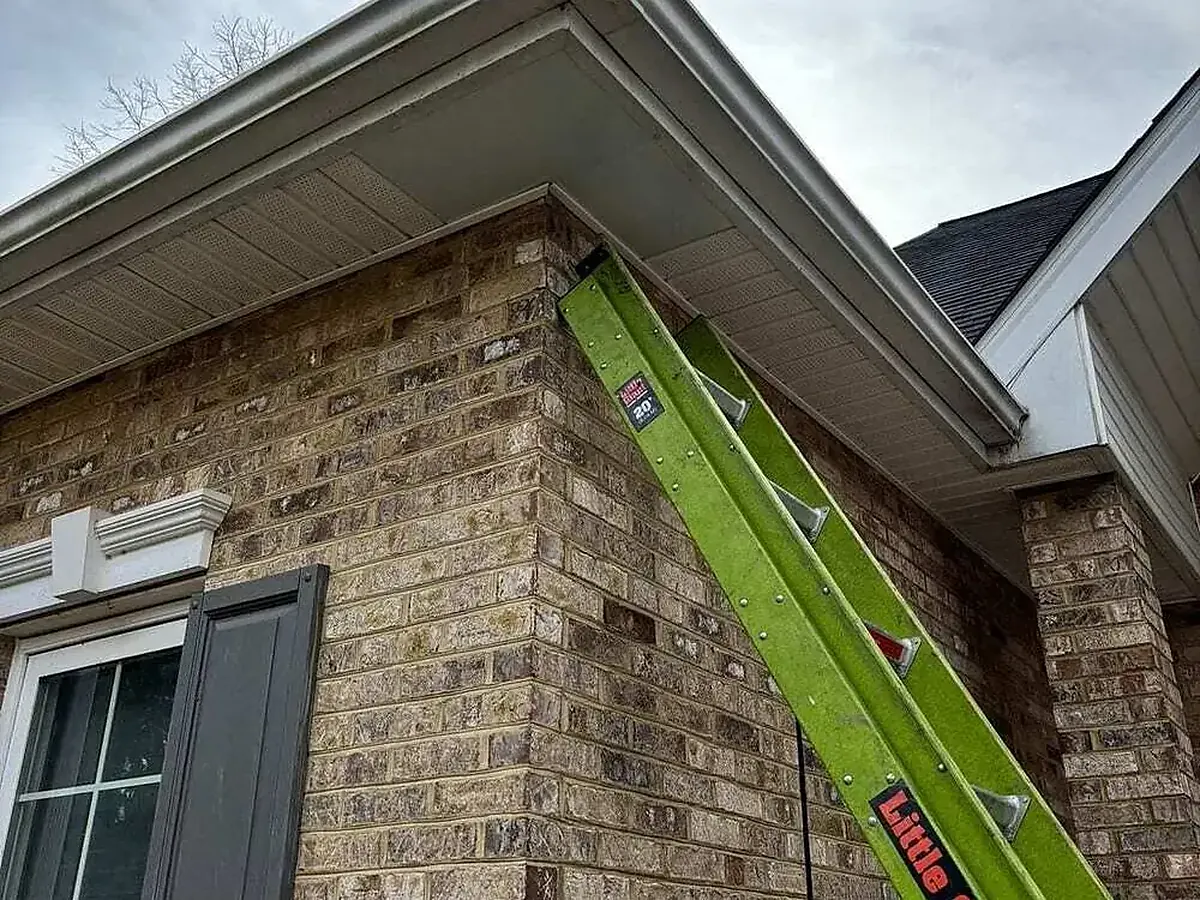
Raccoon in attic? Removal begins outside, at the spot where it climbed up. Raccoons climb easily and work on whatever gives way. Roof returns, where a lower roof meets a wall, are a favorite because the corner hides the animal while it pulls at the edge. Gable vents with thin aluminum louvers and roof vents with plastic hoods are easy to break.
Chimneys
An uncapped flue is a dry, quiet den. Do not light a fire to drive her out while young may be inside. Raccoon in chimney removal starts with finding the young.
Decks, porches and crawl spaces
Low spaces with loose lattice or a torn foundation vent screen give raccoons ground-level shelter. Raccoons may move into burrows dug by other animals. Our entry point sealing page explains how those spaces are closed.
Health risks in a raccoon den
Raccoon roundworm
Raccoons can carry a roundworm whose eggs pass in their droppings. The eggs become infectious after a few weeks in the environment, and people get sick by swallowing them. Young children who play in dirt are most at risk.
That makes a raccoon latrine a cleanup job to take seriously. Keep kids and pets away from it. We remove droppings and soiled material in gloves, a respirator and washable or disposable boots, and bag it for disposal.
Rabies
Raccoons, along with bats, skunks and foxes, are the animals most often found with rabies in the United States. Do not touch a raccoon that seems sick, unafraid or unable to walk normally. If a person is bitten or scratched, wash the wound right away with soap and water and get medical care urgently. If a pet is bitten, call your veterinarian.
Raccoon in the attic or chimney? What we do first
Professional raccoon removal starts with the whole house. Here is the order the work follows.
Inspect the whole structure
We check the roof edge, chimney, vents, attic, crawl space and outbuildings. A raccoon pushed out of one opening will test every other weak spot.
Decide on removal or exclusion
Some jobs use a one-way exclusion door on the den entrance. Others call for a cage trap set near the entry. The choice depends on the den, the season and whether young are present, and we check local trapping rules before any trap is set.
Handle the animal within Virginia rules
We get the raccoon out, seal the entry so it can’t come back and repair the damage.
Rebuild the entry
People often call for a raccoon exterminator, but what keeps the next one out is a repair that resists pulling.
Clean the space
Soiled insulation is removed and the area is treated before new insulation goes in. Attic restoration and wildlife damage repair cover that part of the job.
Raccoon proofing: vents and entry repairs
A raccoon that has torn its way in once knows the house has a weak spot, so the repair has to be stronger than what was there before. Raccoon proofing focuses on three places:
- Chimneys. Each open flue gets a cap sized to fit and fastened so it can’t be pried off. Chimneys with more than one flue may need a cap that covers the whole crown.
- Vents. Gable louvers, box vents and plastic roof hoods get heavy-gauge mesh or steel guards screwed into solid framing, so air still moves but paws can’t pull them loose.
- Roof returns and soffits. Rotted fascia and soffit wood is replaced first, then the corner is reinforced with metal so a raccoon can’t get a grip on the edge again.
We also point out tree limbs over the roof and loose downspout straps that give raccoons an easy climb.
Raccoon removal cost
Every raccoon job is priced after the inspection, because the price depends on what the house needs. The main factors:
- Roof height, pitch and how the den entry is reached
- Whether a litter is in the den and the work has to be staged around it
- The number of openings, including the chimney
- Carpentry needed before a seal will hold
- How much soiled insulation and nesting material must be removed
The raccoon removal price is set after the inspection. If you plan an insurance claim, ask your agent first, since some policies cover the damage an animal caused but not the removal.
Questions we hear
Will raccoons come back after exclusion?
Exclusion helps reduce the chance of a return, but no repair is a guarantee. We seal the entry points we identify and reinforce vulnerable areas, and a re-check is worthwhile if new signs appear.
Is wildlife exclusion better than trapping?
Often, yes. Exclusion addresses how the animal got in, which trapping alone does not.
Can raccoons cause serious damage?
Yes. Raccoons can damage wiring, insulation and roofing materials, and damaged wiring or contaminated insulation can create fire and health risks.
Do you offer inspections before exclusion services?
Yes. Every exclusion project begins with a detailed inspection to determine the best solution.
How much does raccoon removal cost?
The roof and the repairs drive most of it: how high the den entry is, whether young are inside, how many openings need closing, whether the chimney is an entry point and how much insulation has to come out.
Will a raccoon get back in after removal?
An entry rebuilt with metal and new wood is hard to tear open. Raccoons are strong and persistent, though, so we check every other weak spot on the roof and chimney, because a raccoon blocked at one corner will try the next.
Is it safe for my kids and pets during raccoon removal?
Yes. Keep children and pets indoors and away from the den entry, any trap and any droppings until the job and the cleanup are done.
What if a mother raccoon has babies in my attic?
Then the job is planned around the litter. We find where the young are, make sure the whole family is out and only then close the opening, so no kits are left behind in the attic. Leave the opening alone until we get there.
Related Services
Send us the details
Thank you, we have your request
We will call or write back to set up your inspection. If it cannot wait, call (540) 494-8278.
Find us on Google Maps
Moorman’s Wildlife Management & Pest Control
617 Middle Valley Rd, Hardy, VA 24101
(540) 494-8278