
Raccoon Exclusion in Roanoke: Keep Raccoons Out of the Attic and Chimney
Heavy footsteps in the ceiling after dark, a soffit hanging open or chirring sounds from the fireplace in spring usually mean a raccoon has moved in. Raccoon proofing for attics and chimneys closes the house so the raccoon that left, or the next one, has a much harder time getting back inside. Moorman’s Wildlife Management & Pest Control does this work near Roanoke and Smith Mountain Lake and across Southwest Virginia. Call (540) 494-8278 and we’ll find the way in, make sure no kits are left behind and seal the opening with steel.
- Office617 Middle Valley Rd, Hardy, Virginia
- Phone(540) 494-8278
- Service areaSouthwest Virginia, including Roanoke, Lynchburg and Smith Mountain Lake
Why Raccoons Can Defeat Ordinary Fixes
Raccoons are strong for their size. They pull off loose vent covers, lift the edges of shingles and flashing, tear thin aluminum soffit and push through rotted boards. Screens and covers that stop a squirrel or a bird often fail against a raccoon.
That is why raccoon work calls for heavier materials and more fasteners than most jobs, and why rotted wood is replaced instead of having mesh screwed over it.
Chimneys
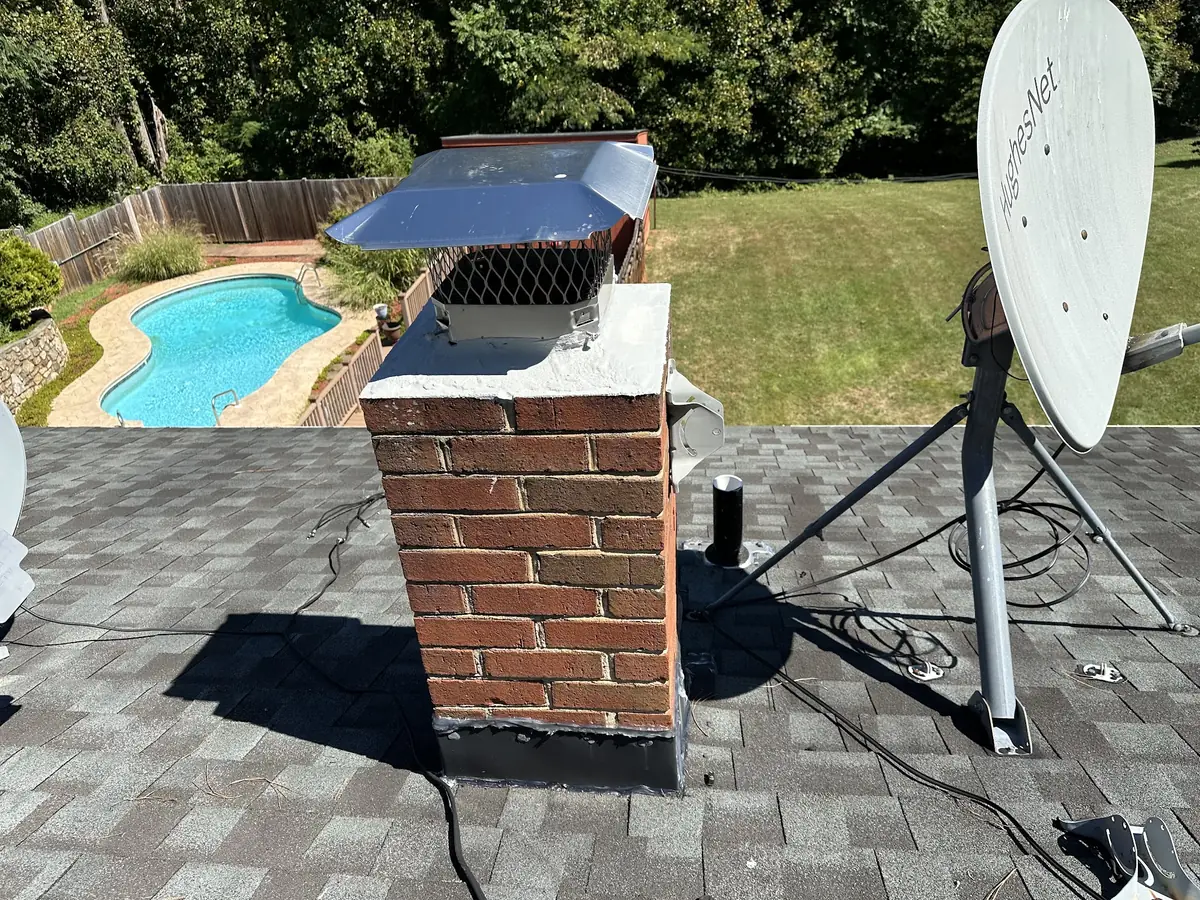
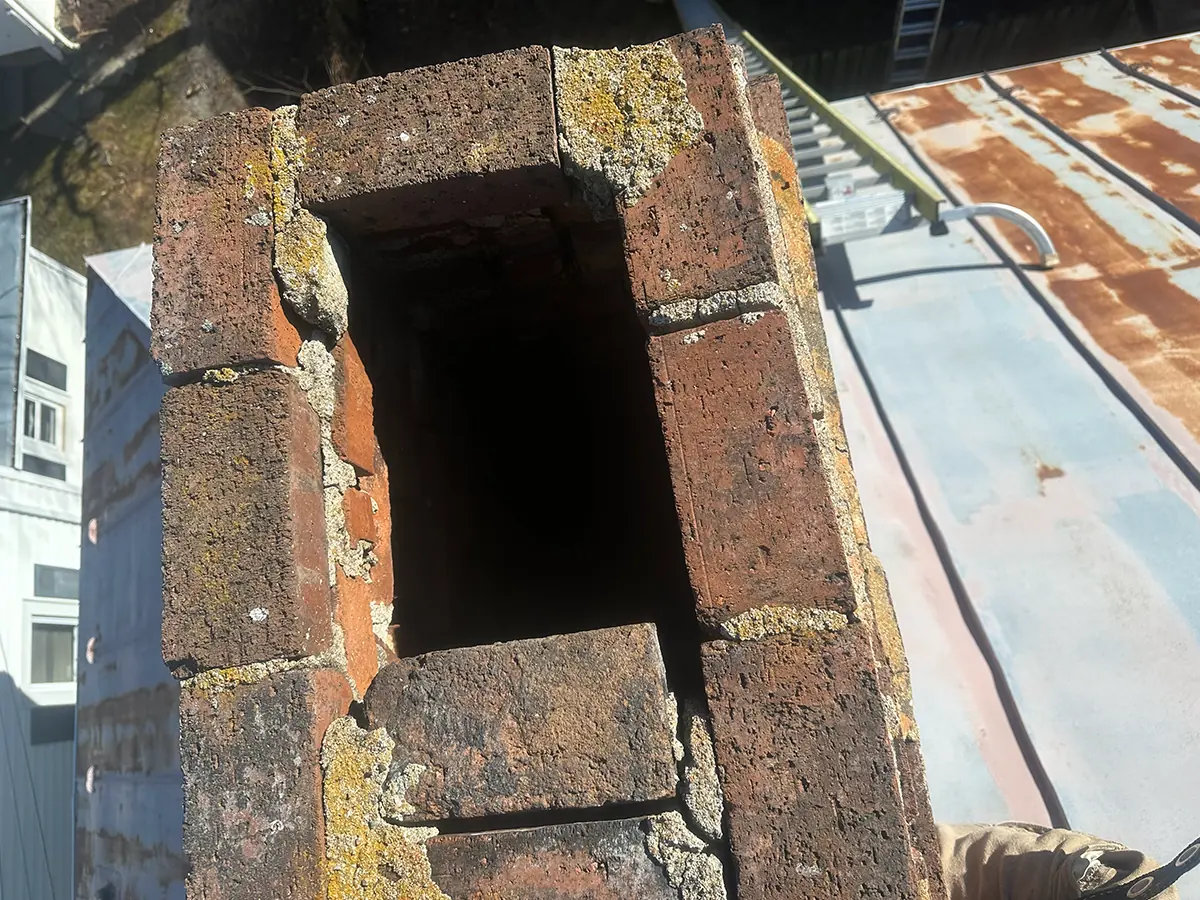
An open flue looks like a hollow tree to a raccoon: dark, sheltered and easy to climb. A closed damper often does not stop one, and a raccoon that gets in can end up trapped or nesting above it. An open chimney is one of a raccoon’s favorite den sites, so we check it on every visit.
A cap goes on only after the flue is confirmed empty of animals and young. If you suspect an animal is inside, do not light a fire.
Roof Vents, Soffits and Roof Edges
Box vents and plastic roof vents are popular raccoon entries because they can be torn open from outside. So are soffit panels at the overhang and the fascia boards along the roof edge.
- Roof vents get heavy-gauge metal guards screwed into solid framing
- Soffit panels that have been pulled down are replaced or backed with metal
- Soft or rotted fascia is repaired before anything is fastened over it
Our roofline protection page goes into these repairs in more detail.
Decks, Crawl Space Doors and Foundations
Not every raccoon goes to the roof. Many den under decks, porches and sheds, or push through a crawl space door that is warped or latched loosely. Lattice and thin skirting are easy to pull away.
For these areas we use galvanized mesh fastened to the framing, with the bottom edge turned outward along the ground to make it harder for an animal that digs to get underneath. Crawl space doors are fitted tight and latched with hardware that is harder for a raccoon to flip open.
Spring and Young Raccoons
Raccoons often raise young in attics, chimneys and crawl spaces in spring. Kits cannot leave on their own, and a mother whose way back is blocked will keep tearing at the house to reach them. For that reason a one-way device is not used until we are sure no young are inside.
When young are present, the work is planned around them in accordance with Virginia wildlife regulations, and the permanent repairs follow once the space is empty.
Giving Raccoons Less Reason to Try
Exclusion works best when the property offers less to test. Trash cans with latching lids, pet food brought in at night, secured bird feeders and compost kept away from the house all help. Limbs that reach the roof act as a ladder, so we point out which ones to cut back.
Raccoon Exclusion: What It Looks Like
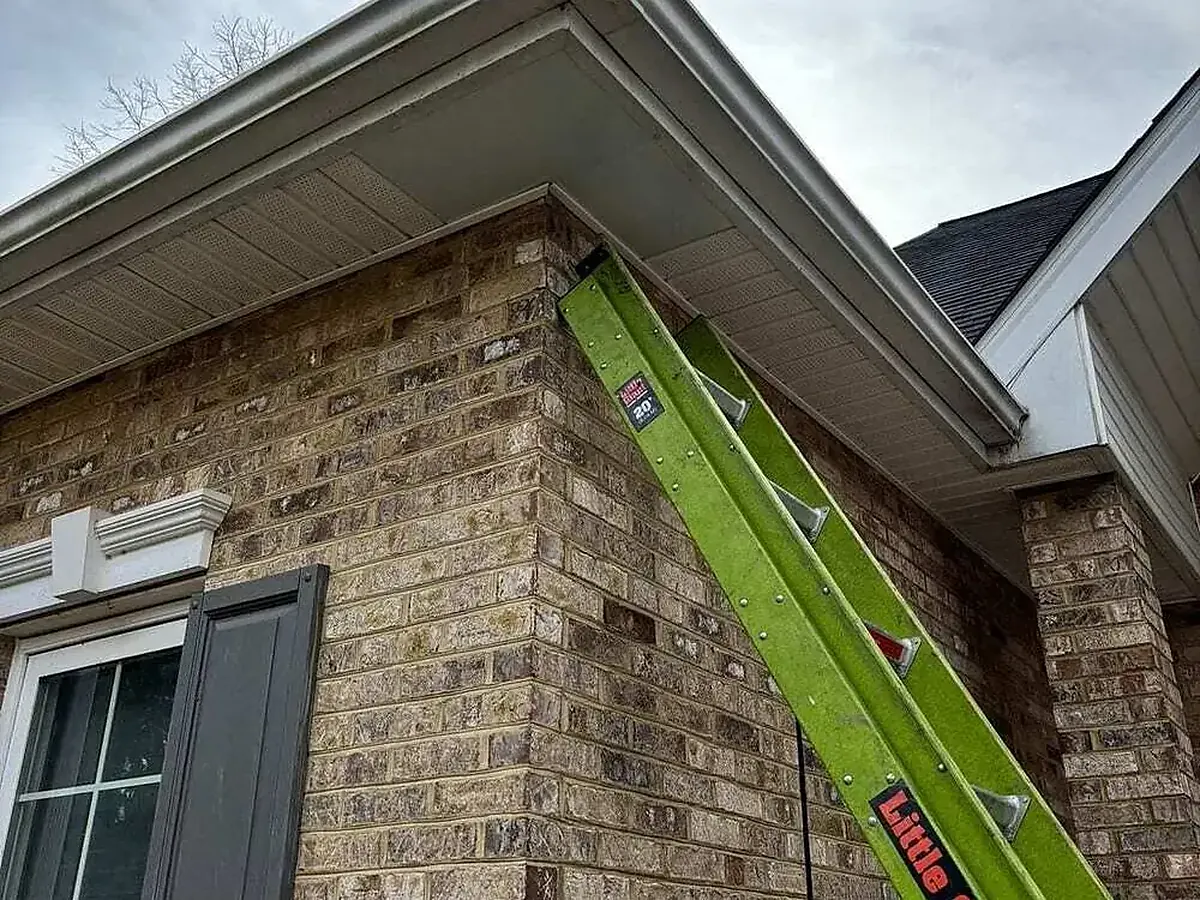
Raccoon Exclusion Service Areas
Roanoke · Lynchburg · Blacksburg · Martinsville · Lexington · Smith Mountain Lake · and surrounding communities
Where raccoons get in
A tree limb over the roof, a downspout or a rough brick corner is all they need to reach the top of a house. To keep raccoons out of attic spaces, these are the spots we check most:
- Chimneys. An uncapped flue is a favorite place to give birth.
- Roof vents. Box vents, turbine vents and gable louvers with weak covers.
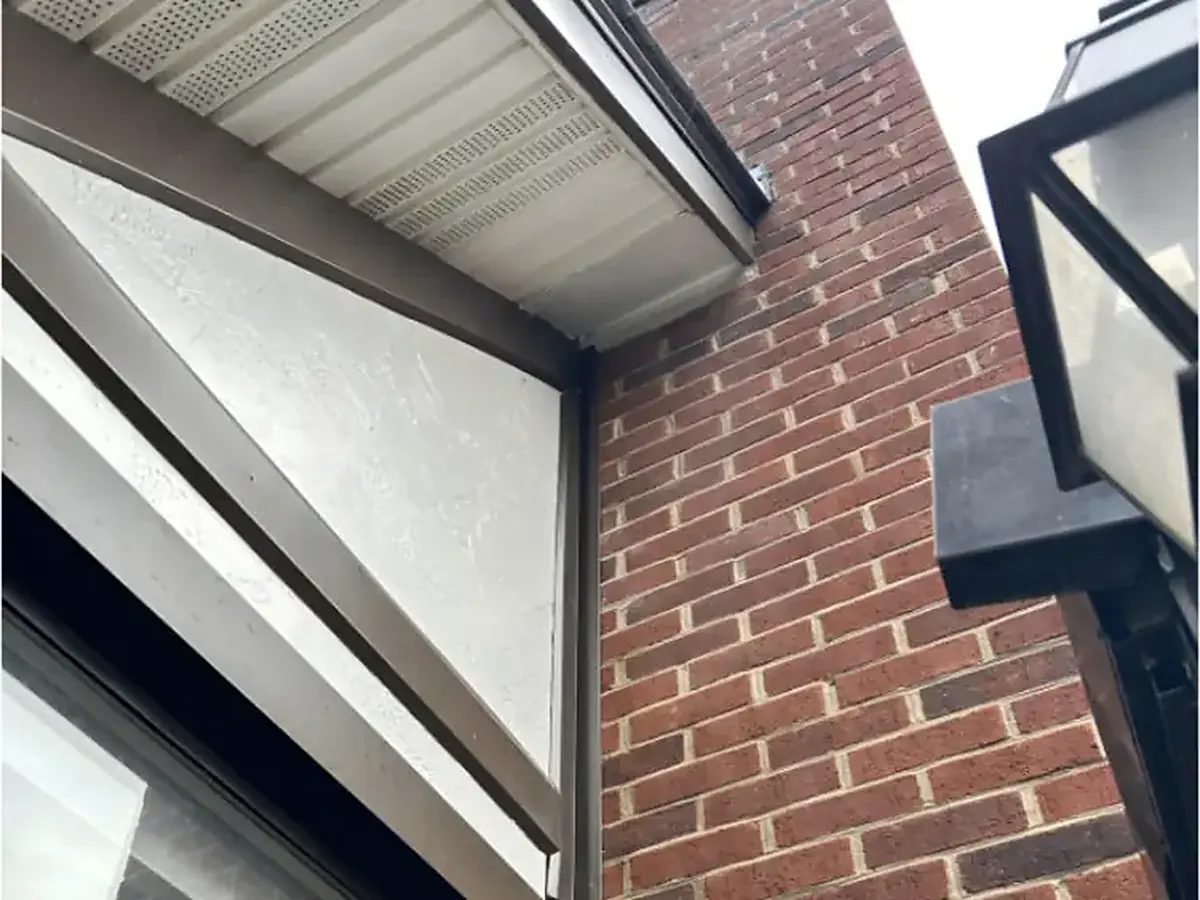
- Soffits and fascia. Corners where the overhang meets the roof. A raccoon will rip loose shingles or fascia boards to reach an attic or wall space.
- Roof returns and dormers. Places where two rooflines meet and leave a gap.
- Decks and porches. Dark, dry space below the floor. Our entry point sealing explains how those get closed.
Closing chimneys and vents to raccoons
Chimneys
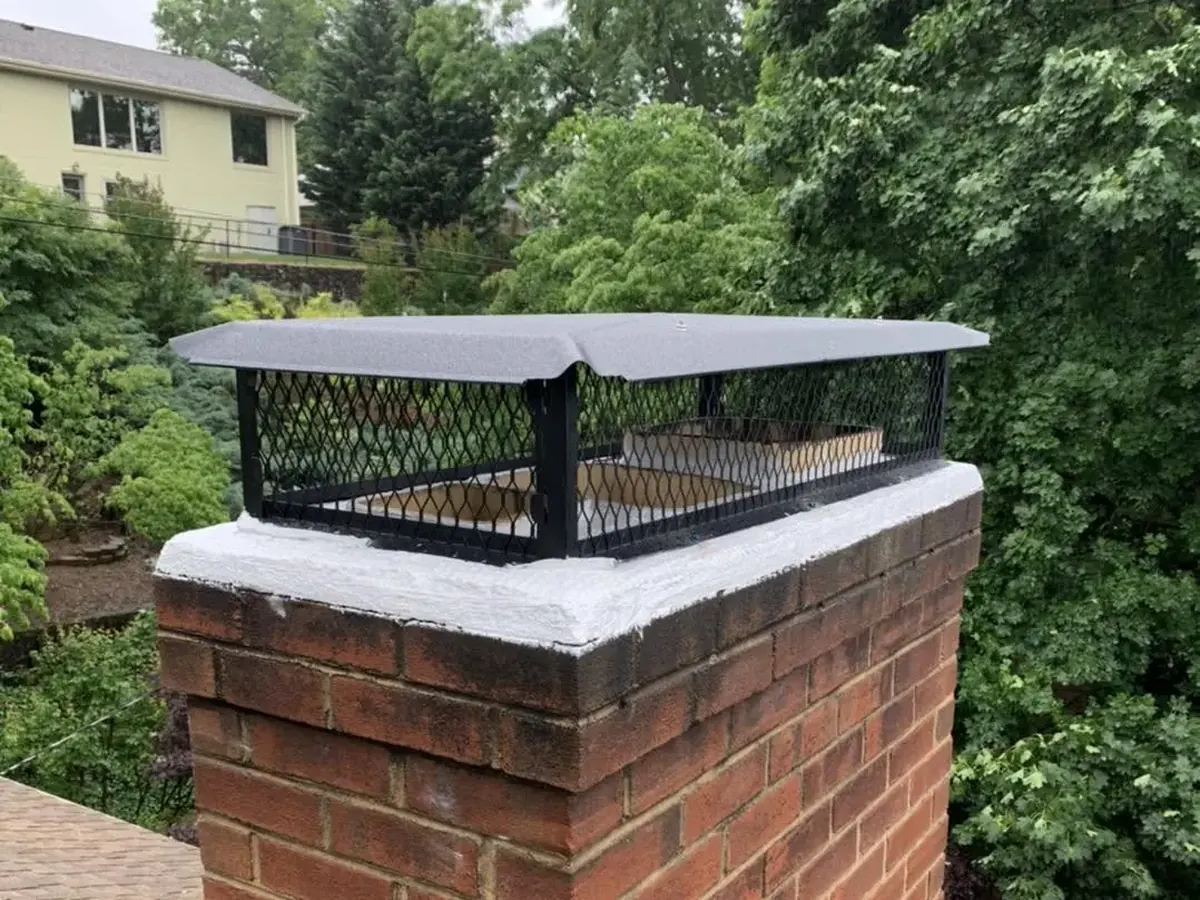
A heavy commercial cap, fastened so a raccoon can’t pull it off, is the usual fix for an open flue. Stainless steel lasts much longer than galvanized metal.
Roof vent guards
Raccoons work at loose edges with their front paws, so a guard has to be heavy steel and screwed into solid wood. Each guard is sized so the vent still breathes. See roof vent guards and soffit repair for each vent type.
Soffit and corner repairs
Rotted wood behind a soffit gives way under a raccoon’s weight. We replace soft sections before the metal goes on. Where a raccoon keeps climbing the same corner, slick sheet metal can take away the grip it uses.
How we raccoon proof a house
Inspect
the roof, chimney, attic, porch roofs and the ground around the house.
Confirm the house is empty
of adults and kits. Raccoons still inside get a way out first.
Seal the openings
with steel guards and heavy mesh fastened into solid framing.
Repair the damage
, from torn soffits to chewed vent boots. Wildlife damage repair has more on that work.
We get the raccoons out, close the entries we find so they are much less likely to return and repair what they tore up.
Questions we hear
Can raccoons really tear off a vent cover?
Light covers, yes. Raccoons grip and pull with their front paws, and thin plastic or aluminum bends easily. Heavier metal guards, screwed into solid framing, are much harder for them to move.
What if raccoons are living under my deck?
The deck is sealed with mesh fastened to the framing and turned outward along the ground, but only after we confirm no animals or young are underneath. A one-way exit can be used first when appropriate.
Is spring a bad time for raccoon exclusion?
It takes more care. Raccoons often have young in spring, so we check before using a one-way device and may adjust the plan. The inspection and some repairs can still go ahead in the meantime.
What helps keep raccoons from coming back after the work?
Solid repairs plus fewer attractants. Latching trash lids, pet food kept indoors overnight and trimmed limbs near the roof all lower the odds that a raccoon will test the house again.
How much does raccoon proofing cost?
It depends on the number of openings, the chimney and how much repair the roofline needs. We inspect first and give you a price for the whole plan.
How long does raccoon proofing take?
Sealing can often be done in a visit or two. If a mother has young in the attic or chimney, the final seal waits until the whole family is out.
Will raccoons come back after proofing?
A raccoon may test a sealed spot for a few nights, but steel fastened into solid wood is much harder for it to defeat. If it finds a new weak spot, call us so we can check it.
Is raccoon proofing safe for my kids and pets?
Yes. The work is done outside and on the roof. Keep children and pets away from any raccoon droppings, and leave latrine cleanup to people with the right protective gear.
Request an inspection
Request a Raccoon Exclusion Inspection
If you have an open chimney, a damaged roof vent or an animal under the deck, tell us what you are seeing. We will inspect the whole structure and explain how each opening should be rebuilt.
Send us the details
Thank you, we have your request
We will call or write back to set up your inspection. If it cannot wait, call (540) 494-8278.
Find us on Google Maps
Moorman’s Wildlife Management & Pest Control
617 Middle Valley Rd, Hardy, VA 24101
(540) 494-8278