
Subterranean Termites in Virginia: Identification, Signs and Swarm Season
A cloud of small winged insects near a window on a warm spring day is often the first sign of subterranean termites in Virginia homes. They live in the soil and reach the wood of a house through mud tubes, often eating unseen for years. This guide explains how to identify them, tell them from flying ants and read the signs they leave. If you have found swarmers or mud tubes, call Moorman’s Wildlife Management & Pest Control at (540) 494-8278 or request an inspection.
Want a professional to look or need treatment? See termite inspection and termite treatment.
At a glance
- Type: Insect
- Common VA species: Eastern subterranean termite
- Size: 1/8 in. workers; swarmers slightly larger with wings
- Color: Pale cream workers; dark swarmers
- Active season: Year-round underground; spring swarms
- Where found: Soil contact, foundations, crawl spaces
- Main problem: Structural wood destruction, often hidden
- Swarming: Mature colonies typically produce swarmers in spring
- Entry gap needed: N/A: travels through soil and mud tubes
Swarmers or flying ants?
Subterranean termites build distinctive mud tubes along foundations and consume wood from the inside out, so damage can be more advanced than it looks from the surface. A WDI (Wood-Destroying Insect) inspection by a qualified, licensed professional is the best way to find out whether termites are active. If damage is found, a structural engineer or other qualified building professional can judge how it affects the structure.
How to Identify a Subterranean Termite Problem
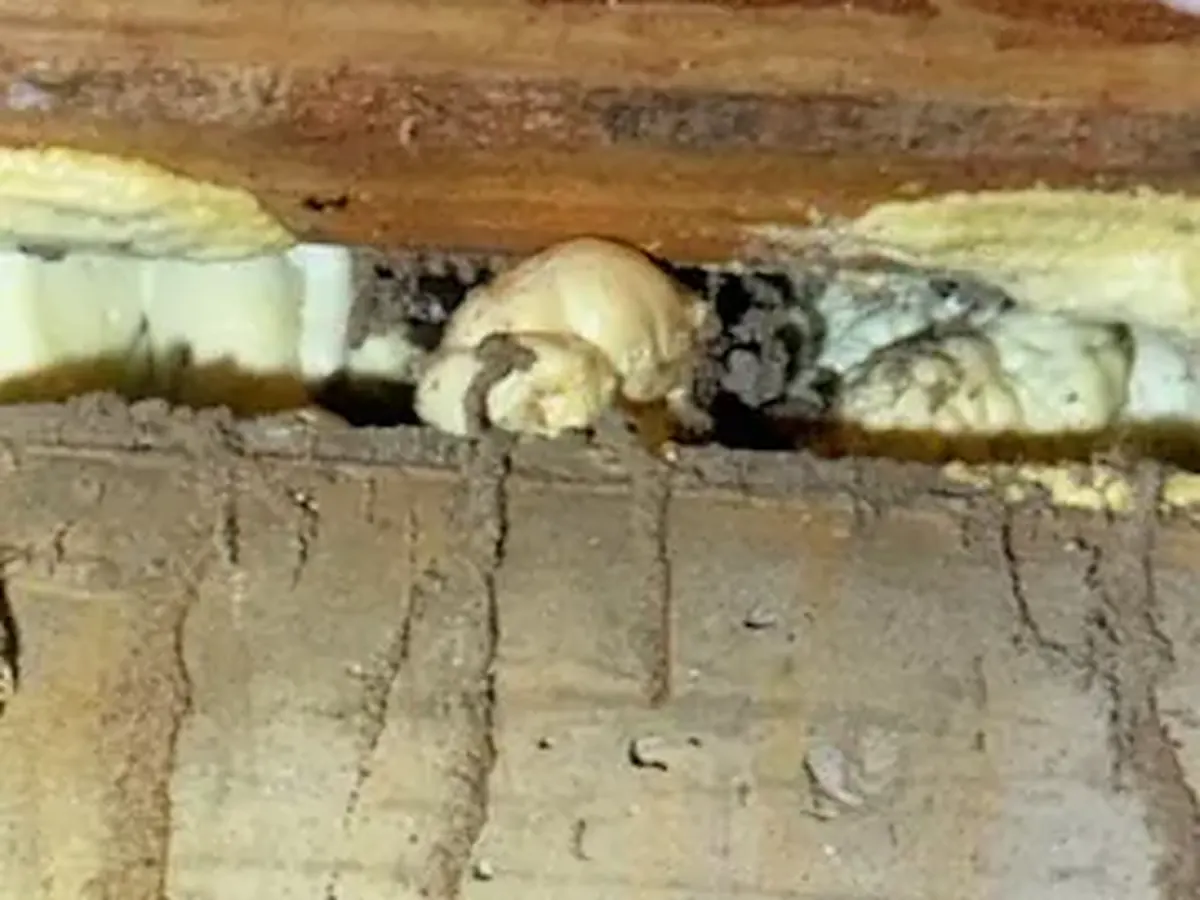
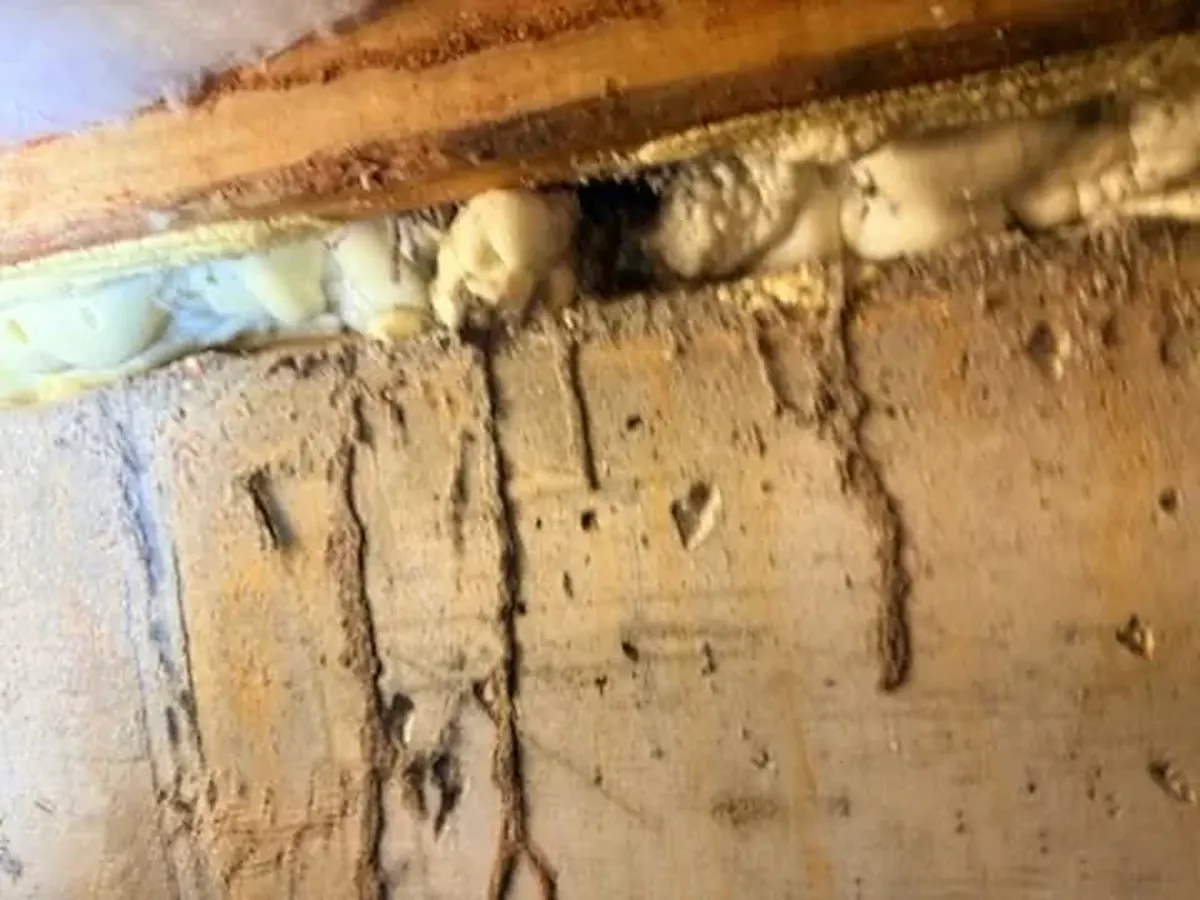
The way to tell termite damage from other wood-destroying insects is the mud tube: subterranean termites build pencil-width tunnels of soil and saliva along foundation walls to travel between the soil and wood above ground without being exposed to open air. A mud tube on a foundation wall is a strong reason to schedule an inspection, but a tube alone does not show whether termites are active now. Old tubes can remain after a colony has been treated or has moved on, so an inspector checks whether a tube is active and looks for other evidence.
Termite damage itself is usually hidden. The wood surface can look intact while the interior is hollowed along the grain, which is why termite activity is often found well after it has started.
Common Signs of Activity
- Mud tubes running along foundation walls, piers, or other soil-to-wood contact points (an inspection is needed to tell whether they are active)
- Wood that sounds hollow or papery when tapped, which can also have other causes
- Discarded wings near windowsills or doors after a spring swarm
- Swarmers (winged termites) emerging indoors, especially in spring
- Soft or crumbling wood along baseboards, door frames or structural members
Where Subterranean Termites Are Commonly Found
Any wood in contact with soil or close to grade, crawl space framing, foundation sills, and areas with chronic moisture. Termites require contact with soil moisture to survive, which is why conditions like wood-to-ground contact, poor drainage, and crawl space moisture are consistently linked to termite risk in this region.
Life Cycle, Behavior, and Seasonality
Seeing swarmers indoors suggests a colony may already be established on or near the property, and an inspection can help confirm it.
| Mar to May | Primary swarming season for Eastern subterranean termites in Virginia |
|---|---|
| Jun to Sep | Colonies actively foraging; underground activity continues |
| Oct to Jan | Underground activity continues at reduced pace; colonies do not go fully dormant |
Property Damage and Safety Considerations
Structural risk, not a health risk. Termites are not considered a disease risk to people. The main concern is structural, and damage can be extensive before it’s visible, since it tracks the wood grain internally. A pest inspection looks for termite activity and the conditions that favor it; judging how much damage affects the structure is a job for a structural engineer or other qualified building professional.
Regular inspection matters more than any single sign. Because early damage is hidden, a professional inspection can help find activity earlier than mud tubes or swarmers would. How often to inspect depends on the property, past findings and any treatment or monitoring plan.
What Property Owners Can Do
- Eliminate wood-to-soil contact around the foundation
- Correct drainage issues and grading that keep soil moist against the foundation
- Keep firewood and lumber stored away from the structure, off the ground
- Address crawl space moisture, since it directly supports termite activity
- Schedule a professional termite inspection, especially before buying or selling a home
When Professional Service Is Appropriate
Detection and treatment for active termite infestations.
Termite Treatment
Termite Inspection
WDI reports to help find activity before damage spreads.
Termite swarm season in Virginia
Most eastern subterranean termite swarms in Virginia come between March and May, though the peak season can stretch into June. Swarms happen during the day, most often on a warm day right after rain.
Swarmers are drawn to light, so indoors they pile up on windowsills and near doors. They drop their wings soon after landing, leaving little heaps of identical wings behind. Swarmers inside the house usually mean an infestation somewhere in the structure. Swarmers outside near an old stump or landscape timber do not necessarily mean the house is affected.
A colony generally needs 3 to 5 years before it produces swarmers, so a swarm signals a colony that has been growing for some time.
Signs of subterranean termites
Mud tubes
Termites need moisture, so they build covered mud tubes to travel between the soil and the wood. Look on foundation walls, piers, joists, subfloors and inside cracks. Tubes come in several forms:
- Exploring tubes: thin tubes that are one of the best early signs
- Working tubes: wider routes from the soil up to the wood
- Drop tubes: tubes that hang from the wood back toward the ground
- Swarm tubes: short tubes rising 4 to 8 inches above the ground that act as exits for swarmers
An empty tube does not prove the termites are gone, and old tubes can leave marks on surfaces after they fall away.
Damaged wood
Termites eat cellulose, which includes wood, paper, cardboard and the paper facing on drywall. Warning signs include wood that sounds hollow when tapped, wood soft enough to push a screwdriver into and a thin, gritty gray-brown film on surfaces.
Wings
Small piles of shed wings on sills and floors near windows and doors point to a recent swarm.
Termites around Roanoke and Smith Mountain Lake
Crawl spaces with poor airflow can stay damp, and plenty of local homes sit over one. Lake homes have decks, docks and porches with wood close to the ground. Older homes in the Roanoke Valley and Lynchburg often have block foundations, where a tube can run a long way before anyone spots it. Termites thrive wherever these conditions add up:
- Roof, flashing or plumbing leaks
- Air conditioner condensation dripping beside the foundation
- Poorly vented crawl spaces and basements
- Water pooling along the foundation
- Wood touching soil, such as deck posts, siding or stored lumber
- Thick mulch or leaves piled against the house
For local service, see termite treatment in Roanoke.
Related Projects and Guides
Carpenter Ants in Virginia
Another wood-associated pest, often confused with termites.
Read our guide to carpenter ants
Sources
U.S. EPA: termiticide product safety information.
Request an inspection
Think You Have Termites?
An inspection can help identify what is behind termite activity and the options for dealing with it.
Send us the details
Thank you, we have your request
We will call or write back to set up your inspection. If it cannot wait, call (540) 494-8278.