
Guide · By Zakk Moorman, Wildlife Biologist · Updated November 2026
Starling Nests in Vents, Chimneys and Soffits: A Guide for Roanoke Homes
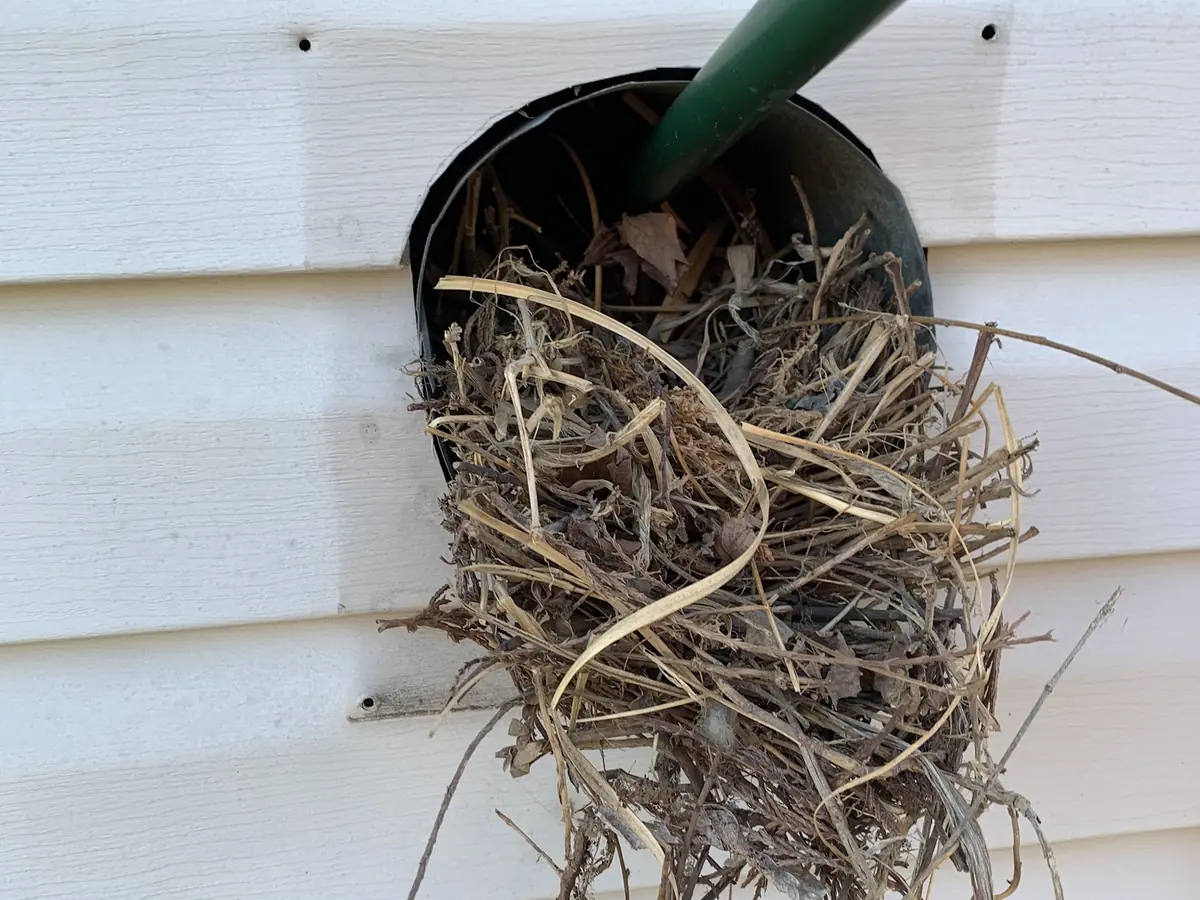
Chirping inside the bathroom fan, grass sticking out of the dryer vent, birds darting in and out of a gap under the eaves: that is often a pair of European starlings nesting in your house. They pack the space with nesting material, streak the siding with droppings and fill the wall with noise for weeks. Moorman’s Wildlife Management & Pest Control clears starling nests and closes the openings for homeowners from Blacksburg to Lynchburg, including Roanoke, Bedford and the lake. Call (540) 494-8278 to have a nest checked.
Signs of a starling nest
- Noise in a wall, ceiling or vent: chirping, scratching and fluttering that gets louder once the young hatch
- Traffic: birds flying in and out of the same vent or gap, easiest to see in the morning
- Debris: grass, twigs, feathers or bits of trash poking out of a vent hood or soffit gap, or piled below it
- Streaking: white droppings running down the siding under an opening
- Weak airflow: a dryer, bath fan or range hood that moves less air than it should
Where starlings nest on a house
Starlings almost always build inside a cavity, most often somewhere between 10 and 25 feet up. That puts most of a roofline in range. They rarely make their own holes, so the opening was there first. Common spots:
- Exhaust vents for bath fans, dryers and range hoods, especially with missing or broken flaps
- Gable and soffit vents with torn or missing screens
- Soffit and fascia gaps, such as a corner that has pulled apart
- Chimneys without a cap
- Holes in siding left by woodpeckers or removed fixtures
Why a nest in a vent is a problem
Starling nests are bulky, and all that grass and feather ends up packed inside a duct or soffit bay.
- Exhaust vents move heat, moisture and lint out of the house. A packed dryer vent or bath fan can’t, so lint, heat and moisture stay in the duct or back up inside. If the dryer takes longer than usual or the fan seems dead, check the outside hood.
- Attic vents such as gable, soffit and ridge vents only move air, so a nest there is less urgent, but it still gives birds a way into the attic.
- Chimneys should be checked before you light a fire if you suspect a nest.
Droppings pile up under busy nests, too. The fungus behind histoplasmosis grows in soil and debris rich in bird droppings, so don’t sweep or blow dry droppings, keep kids and pets away from heavy buildup and leave large piles to a professional.
How long starlings stay
From the first egg to young leaving the nest takes over a month: about 12 days of incubation and three weeks of feeding in the nest. Many pairs then raise a second brood, so one vent can be busy for much of spring and summer.
That’s why you shouldn’t cover a vent the moment you see birds. With eggs or young inside, the adults keep trying to get back in and the young are stranded. We check the nest first and close the opening once it’s empty.
Check which bird it is first
As imported species, starlings, house sparrows and pigeons fall outside the federal protection that covers most songbirds. Many native birds also nest in and on houses, though, and they are protected.
The chimney swift is the one to know. Swifts glue small nests to the inside of masonry chimneys, and the birds, eggs and nests must be left alone until they leave for the year. A bird in your chimney in summer may well be a swift, so we identify the bird before anything is done.
How we remove starling nests and close the opening
Inspect
We check vents, chimney, soffits and attic, confirm the species and see whether the nest is active.
Remove
Once it can be done properly, the birds and nesting material come out and the duct is cleared.
Clean up
Droppings and soiled insulation in the attic are cleaned out and replaced as needed.
See starling removal and bird control for the full services. Flocks roosting on a business are a different job; see our commercial services.
Birds in a vent?
A vent full of starlings is easier to fix before the second brood moves in. Call (540) 494-8278 or request a nest check, and we’ll clear it and close it up.
Questions we hear
Can I just cover the vent while the birds are out?
Not while there are eggs or young inside. Covering an active nest strands the young and leaves the adults trying to get back in. Once the nest is empty, the material comes out and a proper cover goes on.
Is a bird nest in my dryer vent dangerous?
A blocked dryer vent can’t carry heat and lint out of the house, and lint in a hot duct is a concern. Stop using the dryer until the vent has been cleared and checked.
Are starlings protected?
Starlings are not native and don’t have federal protection. Native birds that use the same spots, such as chimney swifts, do, which is why we confirm the species first.
What does it cost to clear a nest and cover a vent?
It depends on how many openings are involved, how high they are and whether the duct or attic needs cleaning. We price it after we’ve seen the house.
How can I tell starlings are nesting in my house?
Grass sticking out of the dryer vent, chirping inside the bathroom fan and birds darting in and out of a gap under the eaves are often a pair of European starlings nesting in your house.
Related Services and Guides
Request an inspection