
Guide · By Zakk Moorman, Wildlife Biologist · Updated November 2026
Warning Signs of a Damp Crawl Space in Your Virginia Home
Signs of moisture in a crawl space usually show up upstairs before anyone looks underneath: a musty smell in the hall closet, a floor that feels soft or a room that never feels dry in August. Moorman’s Wildlife Management & Pest Control finds the source of that dampness and dries out crawl spaces around Roanoke and Smith Mountain Lake. If you spot several of the signs below, call (540) 494-8278.
Here is what to look and sniff for, from easiest to hardest to spot.
Signs you can notice from inside the house
A musty or earthy smell
The most common clue. Air from the crawl space rises into the home, carrying the smell of damp soil, wet wood and mold. It is often strongest in closets, bathrooms and rooms over the crawl space, and worse on humid summer days.
Floors that feel different
- Soft or springy spots
- Floors that slope, bounce or squeak more than they used to
Long-term dampness can weaken the wood that holds your floor up.
Rooms that feel clammy
If the house feels sticky even with the air conditioning running, extra moisture may be coming from below. An inexpensive hygrometer from a hardware store shows the reading; the first FAQ below gives the range to aim for.
More bugs than usual
Termites and carpenter ants both thrive in dark, damp places with wood close by. A sudden increase near the floors can point to moisture underneath.
Signs you can see from the crawl space door
You don’t need to crawl all the way in. Shine a flashlight from the access opening and look for:
Water droplets on ducts and pipes
In summer, warm, humid outside air drifts in through foundation vents. When it touches cooler ducts, pipes and floor framing, the moisture turns into water droplets. If ducts are dripping, the space is too damp.
Mold or mildew on wood
White, gray, green or black growth on joists and the subfloor means the wood has been damp for a while. Mold can’t grow without moisture, so any growth on framing tells you water is reaching it.
Sagging or fallen insulation
Insulation between floor joists that hangs down, falls out or looks darker in spots may have taken on water. Damp fiber insulation loses much of its insulating power and raises the moisture risk for the wood it touches.
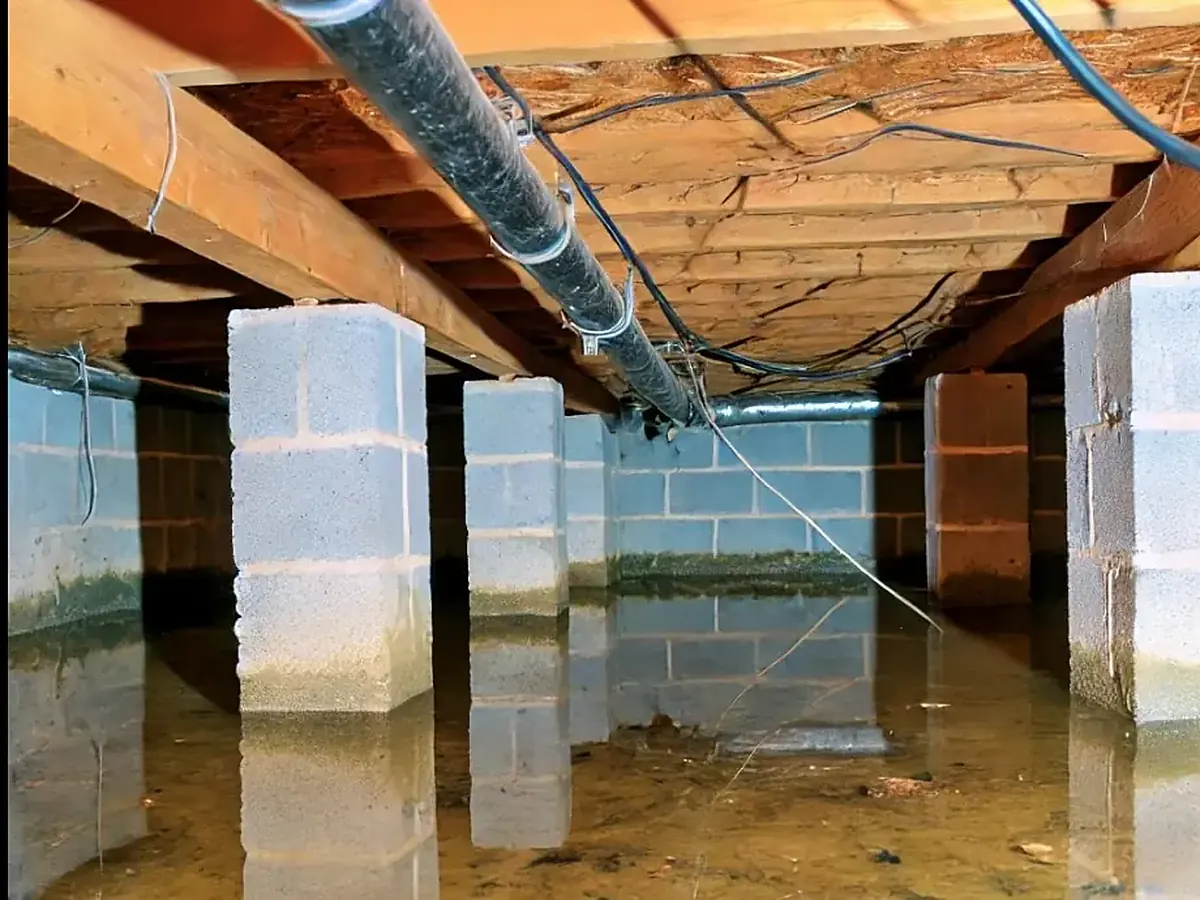
Standing water or wet soil
Puddles, mud or water lines on the foundation walls mean water is getting in from outside, usually from runoff after rain.
A torn, missing or soggy liner
Moisture moves up from bare soil into the crawl space and raises the humidity. Plastic that is torn, pulled up or covered in water isn’t doing its job. Animals can tear liners, too.
Signs you can see from the yard
- Gutters that overflow or downspouts that empty right at the foundation
- Soil that slopes toward the house instead of away
- Broken or blocked foundation vents
- Washed-out mulch or puddles along the walls after rain
Roof water that soaks the soil around a foundation can wick through it into the crawl space. Keeping gutters clear and sending downspouts more than about 5 feet out helps.
Why these signs matter
Mold needs moisture, and so do the fungi that rot wood. A damp crawl space can lead to musty air in your home, weakened floor framing, ruined insulation and more termites and other pests. Termites are drawn to damp wood, so wet framing under the house deserves a look. See termite inspection.
Mice, snakes and other animals also like to move into crawl spaces through broken vents. When we find one, we get it out, seal the gap behind it and repair the damage.
What we look at when we open the crawl space door
- We measure. Humidity in the air and moisture in the joists and subfloor, taken in more than one spot.
- We trace the water. Runoff from the yard, bare soil, a plumbing drip and humid vent air each call for a different fix.
- We look for damage. Rot, mold, fallen insulation, torn plastic and any animal that has moved in.
- We explain the fix. We explain what the crawl space needs and what it does not.
Our article on how crawl space encapsulation works helps you compare.
Have us check your crawl space
Smelling that musty air again, or found drips on the ducts from the access door? Let us take the readings and tell you plainly what your crawl space needs, if anything. Call (540) 494-8278, or book your moisture check online.
Questions we hear
What humidity is too high for a crawl space?
Keep it below 60 percent relative humidity. A reading between 30 and 50 percent is a better target, because mold gets started more easily as the air gets damper.
Why does my crawl space sweat in the summer?
Humid outside air comes in through the vents and condenses on cooler ducts, pipes and wood. That pattern is typical of vented crawl spaces in humid climates like ours.
Can a damp crawl space make my house smell?
Yes. Air moves up from the crawl space into the living space, so damp soil, wet wood and mold odors end up in your rooms.
Is a little moisture in a crawl space normal?
Some moisture from the soil is normal, which is why a ground cover and some way to stay dry help so much. Standing water, dripping ducts or mold are not normal.
Should I close my crawl space vents?
Only if the space is being sealed and dried another way, such as with a liner and dehumidifier. In a regular vented crawl space, vents stay open and screened.
What are the crawl space moisture warning signs?
Musty smells, sweating ducts or pipes, damp or dark wood, mold, standing water and soil that stays wet are the common signs. Roof water that soaks the soil around a foundation can also wick into the crawl space. We can take the readings and tell you plainly what your crawl space needs, if anything.
Related Services and Guides
Request an inspection