
Guide · By Zakk Moorman, Wildlife Biologist · Updated November 2026
Is Your Roanoke Home Properly Insulated? An Attic Checklist
Upstairs rooms that won’t stay warm, a power bill that spikes every January and July, or scratching overhead can all trace back to the attic. Insulation that looks fine from the hatch can be too thin, packed flat in places or ruined by animals that once lived there. Moorman’s Wildlife Management & Pest Control checks Roanoke attics for both problems, depth and damage. For an attic check, call (540) 494-8278.
This guide shows how to check your own attic, what levels fit our climate and why the order of repairs matters.
Why the attic matters most
Heat moves toward cold, and in winter the coldest neighbor of your living space is usually the attic. Air sealing plus added insulation in attics and over crawl spaces cuts heating and cooling costs by about 15 percent on average.
The payoff goes past the bill: less outside noise, less dust, pollen and insects getting in, better humidity control and fewer ice dams along the roof edge.
Signs your attic insulation isn’t doing its job
Start with what you notice downstairs:
- Heating and cooling bills that jump in the hottest and coldest months
- Drafts, cold upstairs rooms or a big temperature gap between floors
- Ice dams at the eaves after snow
- Scratching, rustling or thumping overhead
- Odors that come and go, often worse in warm weather
The joist test
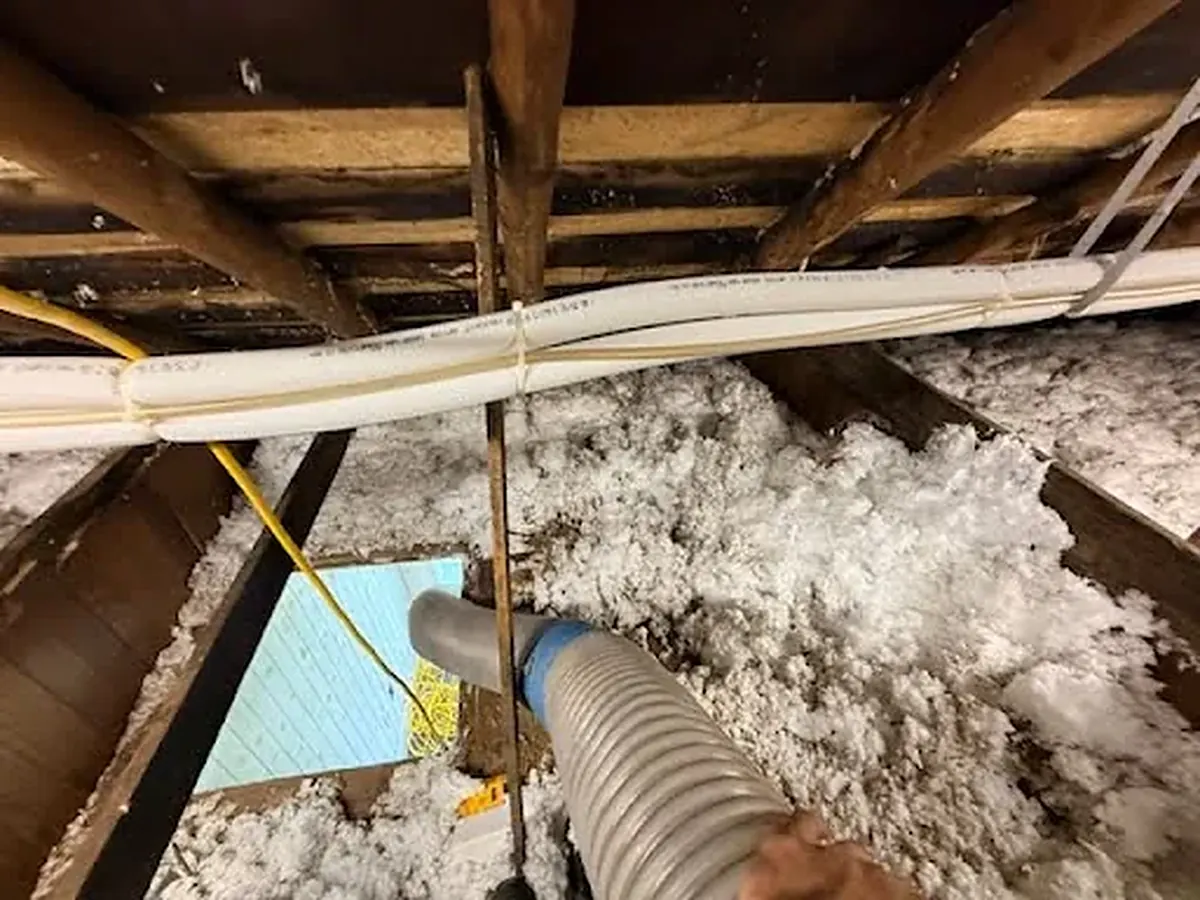
From the hatch, look across the attic floor. If the insulation is level with or below the tops of the floor joists, you probably need more. If it hides the joists completely, you likely have enough. It should be even, with no low spots, and the eaves deserve a close look because that is where it is often thin.
Damage that depth won’t show
Look for tunnels and trails through the insulation, flattened patches, nesting material, droppings, stains and chewed wiring. Don’t touch droppings or nests with bare hands, and don’t sweep or vacuum them.
How much insulation a Roanoke attic needs
Roanoke sits in climate zone 4. The recommended targets for this zone are:
- R-60 in an attic with no insulation
- R-49 in an attic that already has 3 to 4 inches
- R-19 under floors over a crawl space
R-value is a measure of how well a material slows heat, and higher is better. Inches alone don’t tell you the R-value, because materials differ per inch, so the product’s coverage chart decides how deep it goes. Check your county’s climate zone with your local building office before you buy.
How animals ruin attic insulation
An attic is warm, dry and quiet, and animals that slip in at the roofline use the insulation as bedding. Gray squirrels are a common example: they gnaw wiring and vent boots, stash food and leave droppings and urine behind.
Insulation works by trapping still air. Once animals pack it into trails and nests, it holds less air and slows less heat, so the attic acts as if it had far less insulation than it does.
Soiled insulation is a health issue too. Rodent waste can spread illness, and sweeping or vacuuming it can lift germs into the air. Insulation soaked with waste usually has to come out rather than be covered.
Not sure what was up there? Our wildlife damage repair checklist can help, and bat droppings are covered on our bat guano cleanup page.
The right order for insulation work after animals
New insulation laid over an open gap and a dirty attic floor is money wasted. We work in this order:
Inspect and find the way in
We confirm whether animals are still there and how they get in. An opening that may be in use stays open until every animal, young included, is out.
Seal the entry
We close the gap they used and check the rest of the roofline, vents and soffits.
Remove damaged insulation and clean
Soiled or matted insulation comes out and the attic floor is cleaned.
Repair the damage
Chewed ducts and wood are repaired. Chewed wiring should be checked by a licensed electrician.
Air seal and re-insulate
Gaps around pipes, wires and light fixtures are sealed, then the attic is filled to the recommended level.
Steps one and two decide whether step five lasts. Fresh insulation in an attic animals can still reach just becomes the next nest.
Questions we hear
How can I tell if my attic is short on insulation?
If you can see the tops of the joists across the attic floor, the layer is thin. A deep, even blanket that hides them usually means you’re covered, though it is normal for the layer to be thinner near the low eaves.
Is it OK to cover soiled insulation with a fresh layer?
We don’t recommend it. Covering rodent waste doesn’t remove it or the germs in it. Damaged sections come out and the area is cleaned first.
Will new insulation keep animals out?
No. Animals come in through gaps at the roof, soffits, vents and chimney, and insulation sits on the attic floor. Sealing those openings is what keeps them out.
How much will better insulation save me?
Air sealing with added insulation can save around 15 percent on heating and cooling on average, according to EPA Energy Star. Your number depends on what you have now, how leaky the house is and how you heat and cool it.
Is attic work safe for my family and pets?
Yes, when it is planned. Before any soiled insulation comes out, we walk you through how the attic will be closed off from the rooms below and whether anyone should stay out of certain areas while we work.
Related Services and Guides
Request an inspection
Book an attic check
One visit answers both questions: how much insulation you have, and whether animals have spoiled it. Call (540) 494-8278 or book an attic check online. You can also read more about our insulation installation work.