
Guide · By Zakk Moorman, Wildlife Biologist · Updated November 2026
Is Crawl Space Encapsulation Worth It for Your Virginia Home?
Is crawl space encapsulation worth it? For some houses it is the fix that finally clears a musty smell and dries out sweating ducts. For others, a simple liner does the job for far less.
Moorman’s Wildlife Management & Pest Control inspects crawl spaces around Roanoke, Smith Mountain Lake and Lynchburg and tells homeowners which side of that line they’re on. Call (540) 494-8278 if you want real readings instead of a sales pitch.
This guide explains how encapsulation works, when it pays off and when it doesn’t.
How crawl space encapsulation works
Vented crawl spaces were built on the idea that outside air moving through would dry them. In a mixed, humid climate like ours, it often works the other way. Summer air drifts in through the vents carrying moisture, and when it meets the cooler floor framing, that moisture condenses on the wood. Over time that can mean mold and decay.
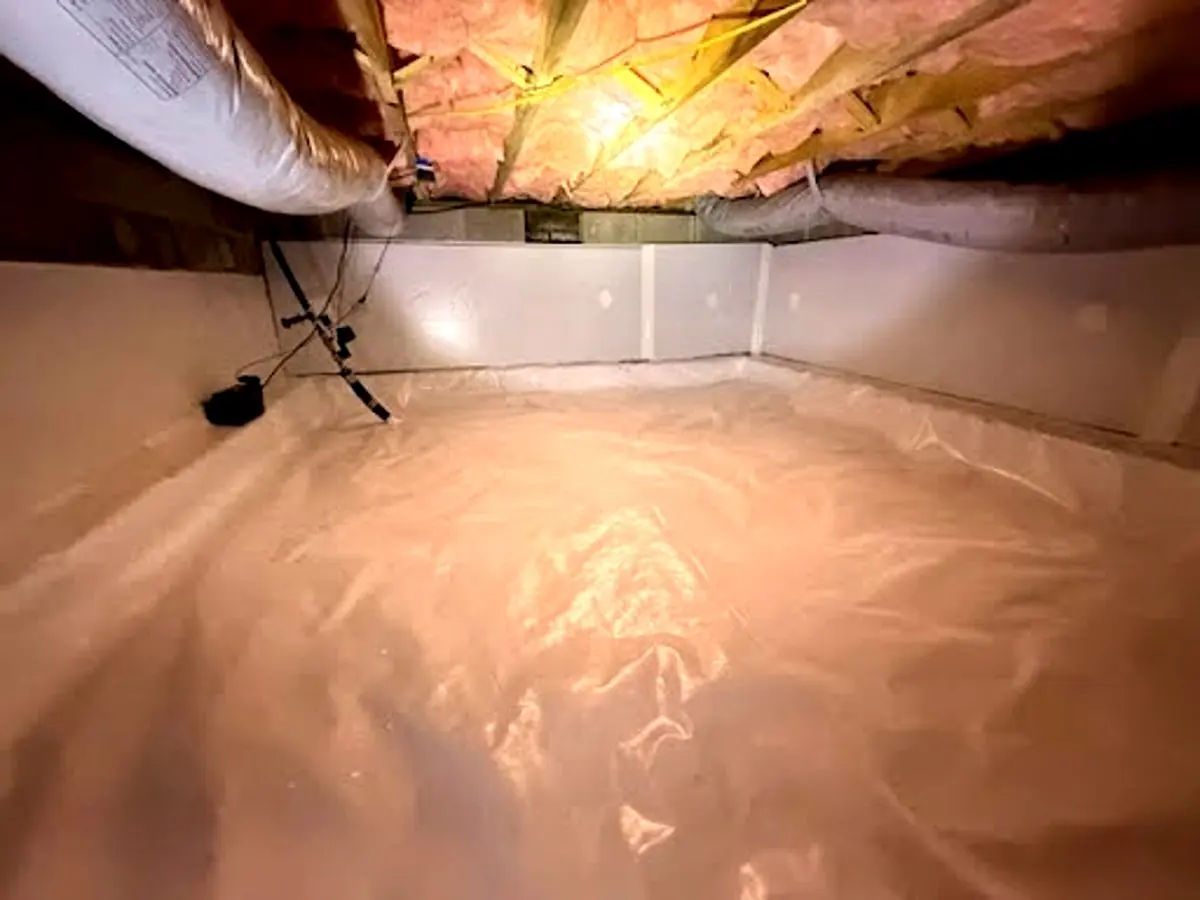
Encapsulation flips the approach. Instead of letting outside air in, it closes the space off and dries it on purpose. A sealed crawl space always needs some way to remove moisture, usually a dehumidifier or a small supply of conditioned air from the house system.
The steps, in order
Control outside water
Roof runoff, grading and drainage come first. Sealing a crawl space that takes on water after storms only traps the problem.
Check safety items
Electrical hazards, existing mold and fuel-burning appliances get checked before anything is closed.
Prepare the floor
Debris and old insulation come out, and the soil is smoothed.
Line the floor and walls
A heavy liner covers the ground with overlapped, sealed seams and runs up the walls.
Seal the openings
Foundation vents, the rim area and gaps around pipes are closed.
Insulate the walls
In termite-prone areas, a strip of bare wall is left at the top so inspectors can spot termite tubes.
Dry the air
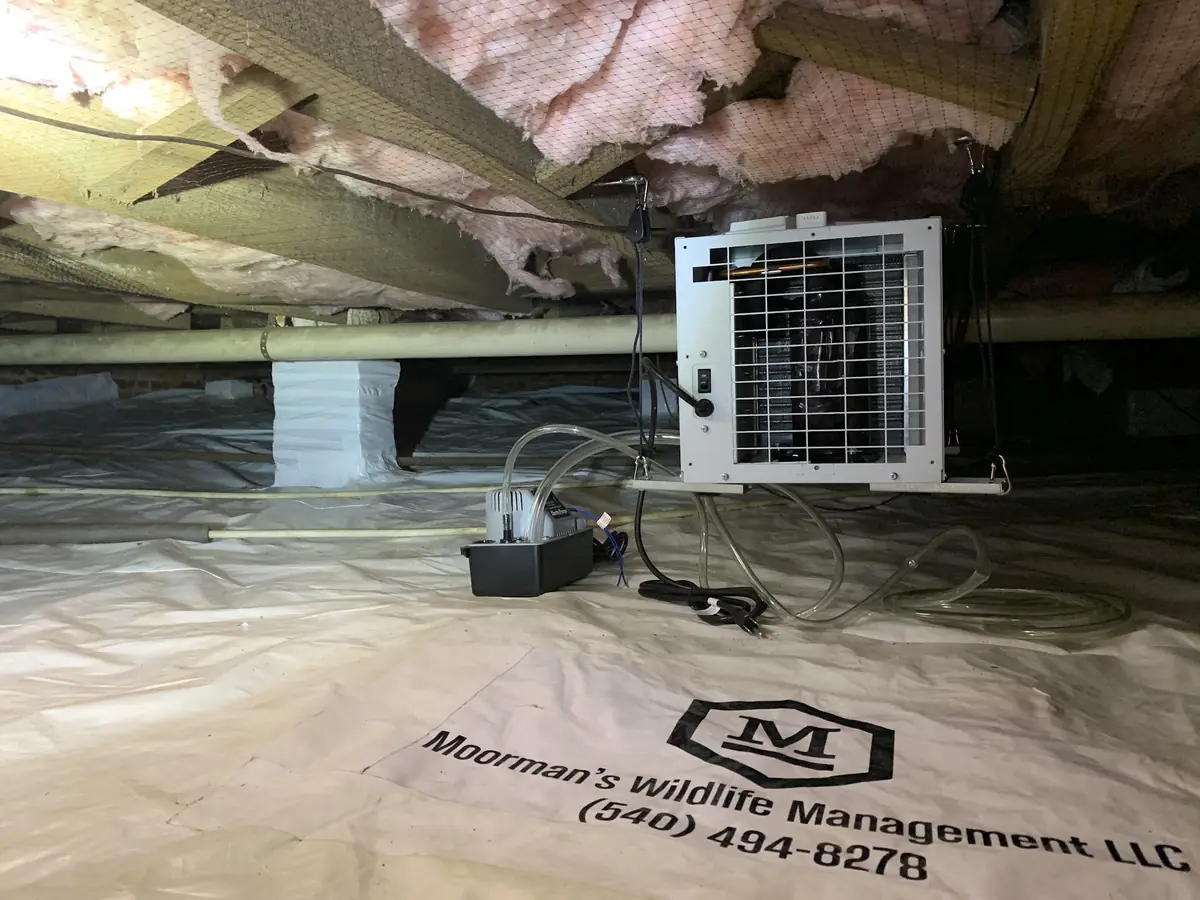
A dehumidifier or conditioned air keeps humidity in a healthy range, ideally between 30 and 50 percent.
When encapsulation is worth it
It tends to pay off when several of these show up together:
- Musty air in the rooms above the crawl space
- Summer condensation dripping from ductwork or floor framing
- Damp walls or a soggy, torn liner
- Mold on joists or the subfloor
- Ducts or a furnace located in the crawl space
- Recurring pest activity under the house
When the space is drying the air the house breathes, and protecting ducts and equipment, sealing it off makes sense.
When it may not be worth it
- Only the dirt floor is the issue. Walls are dry, vents are fine and humidity is reasonable. A vapor barrier may be all you need.
- Water is pouring in. Fix drainage first. Encapsulating a wet crawl space without solving the water is money spent twice.
- The real problem is a broken vent or an animal. Sometimes the smell is a dead animal or nesting mice. Then we get the animal out, seal the entry so it can’t come back and repair the damage.
Encapsulation vs. vapor barrier
| Feature | Vapor barrier | Full encapsulation |
|---|---|---|
| Covers the soil | Yes | Yes |
| Covers the walls | A few inches up | Full height |
| Vents | Stay open | Sealed |
| Drying equipment | Usually none | Required |
| Best for | Bare or torn liner, dry walls | Humid air, damp walls, ducts below |
What drives the cost
We don’t publish a flat price, because these factors swing the total:
- Floor area and wall height
- Water problems that need drainage first
- Number of piers, pipes and posts to seal around
- Liner thickness and type
- Dehumidifier size and drain routing
- Wood repair, debris removal or animal removal
- Gas appliance changes, if needed
Find out if your crawl space needs it
Still weighing a liner against full encapsulation? We’ll take humidity and wood readings, check for water, animals and gas appliances, and give you a straight answer on which one your house needs.
Call (540) 494-8278, or ask us to measure your crawl space. Ready to go? See our crawl space encapsulation service, or encapsulation in Lynchburg.
Questions we hear
Is crawl space encapsulation worth the money?
It is worth it when moisture shows up as musty air, wet wood, sweating ducts and pests. If only the soil is bare and everything else is dry, a liner is often the better value.
Does encapsulation help with energy bills?
It can, especially when ducts or a furnace sit in the crawl space, since they are then in a drier, more stable space. Results vary by house.
Does an encapsulated crawl space need upkeep?
Yes, a little. The dehumidifier has to keep running and draining, and the liner should be looked over now and then for tears from plumbers, cable installers or animals. A torn seam lets damp soil air back in.
Do you have to close the vents?
With full encapsulation, yes, since a machine or conditioned air does the drying instead of outside air. In a crawl space with only a floor liner, the vents stay open and screened.
How long does encapsulation take?
It depends on size, prep and any repairs.
Related Services and Guides
Request an inspection