
By Zakk Moorman, Wildlife Biologist · Updated November 2026
Bats and Disease: What Roanoke-Area Homeowners Should Know
Two illnesses are linked to bats and matter to a household: rabies and histoplasmosis. This page sets out the facts about each. If a bat is in the room with you right now, start with what to do about a bat in the house.
For any health question, your doctor and your local health department come first, and nothing here replaces their advice. Moorman’s Wildlife Management & Pest Control deals with the bats and the building, including bat guano cleanup.
A healthy-looking bat still calls for care
Most bats are not infected with rabies. The difficulty is that a sick bat and a healthy one can look the same, so a bat that has touched a person or a pet is treated as a possible risk.
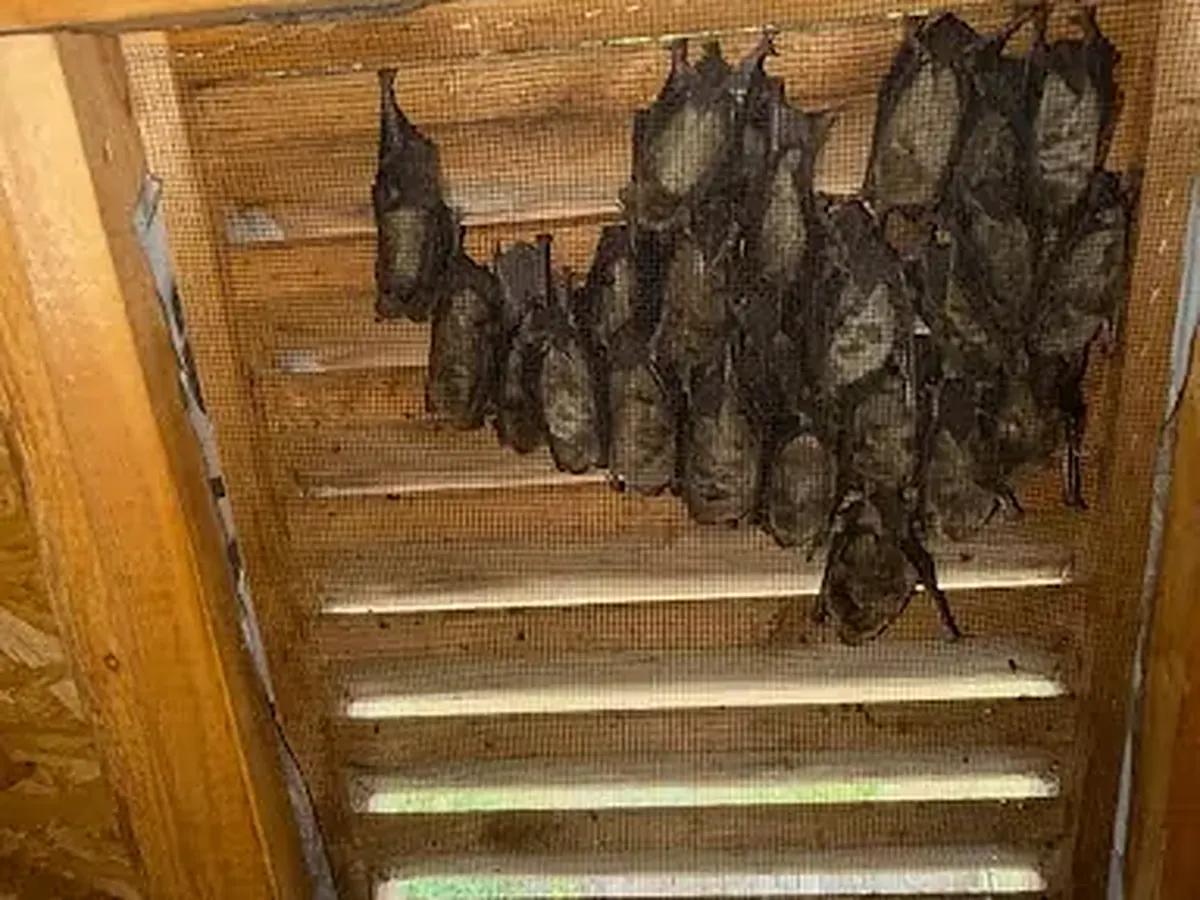
Rabies
How it spreads
Rabies spreads through the saliva of an infected animal, most often by a bite. A scratch, or saliva reaching broken skin or the eyes, nose or mouth, can also pass it on.
Why bats need special care
Bats are the leading cause of rabies deaths in people in the United States. Part of the reason is how easily a bite is missed. A bat’s teeth are so small that a bite may leave no clear mark, and a sleeping person can be bitten without waking.
Why speed matters
Once symptoms begin, rabies is fatal in nearly all cases, but a series of shots given soon after an exposure can prevent it. Symptoms can take weeks or even months to appear. That gap is the reason to call right away rather than wait to see whether anything happens.
What counts as an exposure
Any physical contact with a bat counts. So does finding a bat in a room where someone slept, or near a child left alone or a person who could not tell whether they had been touched. The steps for those first minutes are on the bat in the house page, so they are not repeated here.
Protecting pets
Ask your veterinarian to vaccinate dogs, cats and ferrets against rabies and keep the shots current. If a pet has had contact with a bat or another wild mammal, tell the health department and animal control and have a veterinarian see the pet.
Histoplasmosis
Histoplasmosis is a lung infection caused by a fungus that lives in soil, especially soil mixed with bird or bat droppings. People get it by breathing in the spores. It does not pass from person to person, or between people and pets.
- Symptoms: fever, cough, tiredness, chills, headache, chest pain and body aches
- Timing: usually 3 to 17 days after breathing in the spores
- Severity: mild in many people, but longer-lasting or severe lung infection is more likely in people with weakened immune systems
For a homeowner, the practical point is the droppings. A heavy buildup in an attic is a job for a crew with protective gear, and sweeping a dusty floor of old guano is exactly what to avoid. Our bat guano cleanup page describes how the work is handled.
Where the building comes in
Both illnesses are reasons to get a colony out of the house and the droppings cleared, not reasons to panic. The usual sequence is in the step-by-step exclusion guide, and bats in October explains why the season changes the plan.
Questions we hear
Do all bats have rabies?
No. Most bats do not, but you can’t tell a rabid bat by looking at it, so any touch from a bat is treated as a possible exposure and goes to a doctor or the local health department.
Can I get histoplasmosis from a few droppings?
Risk depends on how much is disturbed and breathed in, and large amounts call for professional cleanup. Don’t sweep, vacuum or stir up droppings to judge the size of the problem. If you’re unsure, have the attic inspected.
Can my dog or cat get rabies from a bat?
Pets can be exposed when they catch or play with a bat. Keep dogs, cats and ferrets vaccinated, and if one has contact with a wild mammal, call the health department and animal control and have a veterinarian check the pet.
Is it safe to stay home while bats are being removed?
Yes. The work happens on the outside of the house and in the attic, and the bats leave through the roofline, not through your rooms. Keep the attic door closed and stay out of the attic until cleanup is finished.
Request an inspection
Bats in the attic, or a bat in the bedroom?
Health questions belong with your doctor and health department. Getting the colony out and closing the gaps is our part.