
Bats in Virginia: Identification, Signs and Habits
Bats in Virginia sometimes roost in homes, and the first sign is often small droppings under the eaves or a dark shape leaving the roof at dusk. This guide covers which bats move into buildings, how to recognize a roost and how bats spend their year. If you think a colony is living in your house, call Moorman’s Wildlife Management & Pest Control at (540) 494-8278 or request an inspection.
Need the bats out of your home rather than identified? See our bat removal service.
At a glance
- Type: Mammal
- Common VA species: Big brown bat, little brown bat (the little brown bat is state endangered)
- Size: Small, usually a few inches long
- Color: Brown to dark brown
- Active season: Spring to fall, varies by species and weather; most hibernate in winter
- Where found: Attics, chimneys, soffits, barns
- Main problem: Guano contamination, odor, histoplasmosis risk
- Litters per year: One litter per year; litter size varies by species (little brown bats have a single pup, tri-colored bats often have twins)
- Entry gap: As small as about 1/4 inch
Is it a bat, a mouse or a bird?
Several Virginia bat species have state or federal protections, and the rules that apply vary by species and time of year. For bats in a house, we follow Virginia wildlife rules on timing and avoid sealing out a colony from May through August, while flightless young may be present. Sealing an opening or trapping bats on your own can leave flightless young inside. If you hear scratching in the attic or see droppings near a gap, a professional inspection is the safest next step.
How to Identify Bats in Your Home
Watching the roofline from a safe distance around dusk may help locate an active bat entry point. Bats leaving the same opening repeatedly can indicate a roost, but noises or odor alone do not identify the animal.
Bat droppings can resemble rodent droppings. Do not crush, rub, sweep or otherwise disturb suspected guano to identify it. A professional inspection can assess the droppings, entry points and other signs without asking you to handle contaminated material.
Common Signs of Activity
- Scratching or high squeaking above the ceiling at dusk and dawn
- Guano piles below a gap, on a porch, deck, windowsill or attic floor
- A developing sharp ammonia odor
- Dark greasy staining at an entry point, from body oils on repeated passage
- Bats circling the house at dusk
- A bat inside living space warrants prompt attention; one bat alone does not confirm an established colony
Where Bats Are Commonly Found in Virginia Buildings
- Attics: the most common roost site, especially where the ridge is warm
- Ridge and gable vents with failed screening
- Soffit and fascia junctions
- Chimneys, particularly uncapped ones
- Behind shutters and siding
- Barns, sheds and outbuildings
- Wall voids
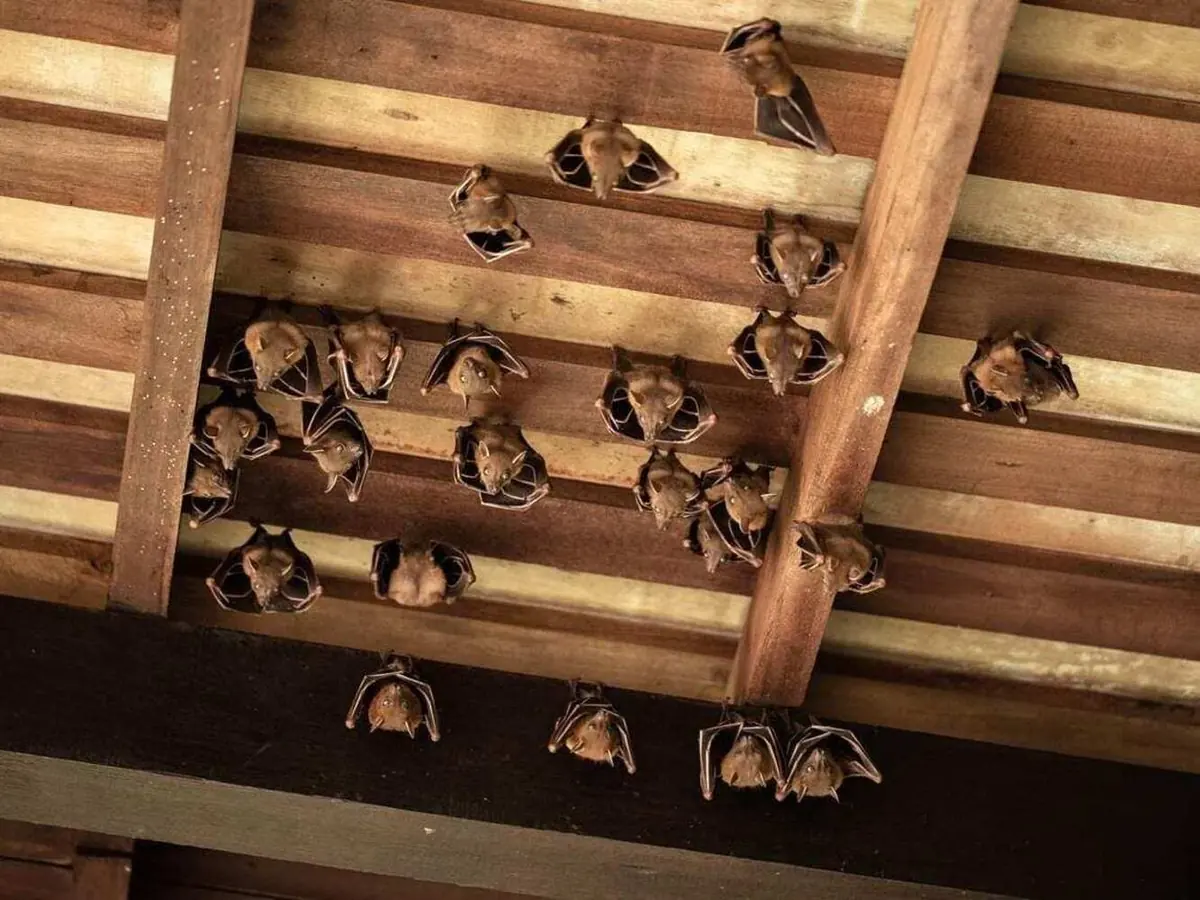
Maternity colonies tend to choose warm, stable sites, which a sun-exposed attic ridge can provide in a Virginia summer.
Life Cycle, Behavior, and Seasonality
Most Virginia bats are insectivorous and feed on night-flying insects, and are valuable to the local ecosystem. A colony roosting inside a structure can still cause droppings, odor and damage, which is why exclusion focuses on keeping bats out of buildings, not removing them from the area.
| Time of year | What happens |
|---|---|
| Mar to Apr | Bats emerge from hibernation and return to summer roosts |
| Jul | May through August is when flightless young may be present, so we avoid sealing out a colony; flight readiness varies by species and colony. |
| Sep to Oct | Colonies disperse; bats prepare to hibernate or migrate |
| Nov to Feb | Hibernation: bats largely inactive in cold-weather roosts |
We follow Virginia wildlife rules on timing and wait until the young can fly before sealing a colony out.
Health and Safety Considerations
Rabies. The proportion of bats carrying rabies is low, but bats are a recognized rabies vector in the United States and the consequence is severe. Never handle a bat with bare hands. If the bat may have touched a person or pet, close the door so it stays in that room and call the local health department for advice. Testing may be advised. Follow your doctor’s or health department’s direction.
Histoplasmosis. Accumulated guano can support Histoplasma capsulatum, a fungus whose spores can cause respiratory illness when disturbed and inhaled. This is why large guano deposits are cleaned up by trained professionals using dust control and respiratory protection, and why a homeowner should not dry sweep or dry vacuum guano.
Structural. Urine and guano can saturate and degrade insulation, can stain or damage drywall and ceilings, and can leave an odor that may persist.
What Property Owners Can Do
- Watch at dusk to confirm and locate the entry point. This is the most useful thing you can do before anyone arrives.
- Have a professional assess gaps around utilities, shutters and siding; seal entry points only after confirming bats and dependent young will not be trapped inside
- Have ridge, gable and soffit vent screening checked; failed screening can be an entry route
- Keep bats out of living space by closing interior attic access
When Professional Service Is Appropriate
A confirmed roost inside a structure calls for professional service. Exclusion requires correctly identifying every entry point, timing the work around the maternity season, installing one-way devices correctly, and sealing to a standard that holds. Getting the timing wrong can seal flightless young inside a wall.
A single bat found indoors is a different situation from an established colony. Repeated bat activity, droppings or bats leaving from the same spot are reasons to request an inspection.
Bat Removal and Exclusion
bat exclusion and entry-point sealing.
Bat Guano Cleanup
Contained cleanup and attic sanitation.
Which bats live in Virginia buildings
Seventeen kinds of bats have been recorded in Virginia, but only a few regularly move into houses, barns and churches. The three you are most likely to find in a building are:
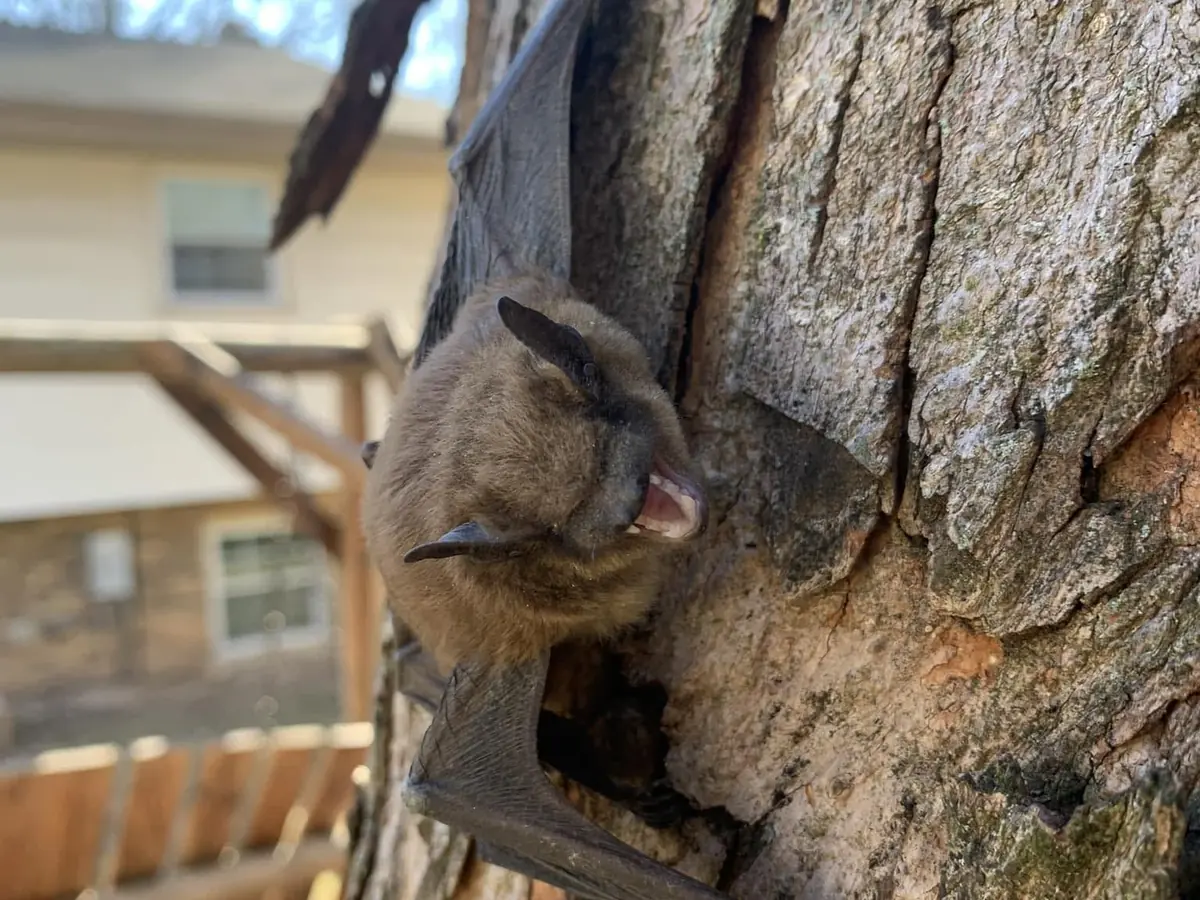
- Big brown bat. A sturdy bat about 4 to 5 inches long, with even brown fur, a big head and short rounded ears. It is found across the whole state and often roosts in old houses, barns and churches.
- Little brown bat. Smaller, a little over 3 inches long, with a dark brown back, a gray to whitish belly and furry toes. It is now endangered in Virginia.
- Evening bat. Looks like a scaled-down big brown bat and has a sharp, acrid odor. It lives mainly in the Piedmont and Coastal Plain and has taken well to buildings.
Several other Virginia bats are endangered, including the tri-colored bat. That is one reason identifying the species matters before any work starts.
Signs bats are living in your home
Droppings
Bat droppings, called guano, collect under the spot where bats come and go: on a deck, window sill, attic floor or the ground below the eaves. They are long and segmented, and they crumble into powder when crushed, showing shiny bits of insect wings and shells.
Mouse droppings look similar at a glance but are harder, taper at the ends and don’t crumble. Bat droppings also never have the white, chalky part that bird droppings do. Our house mice page shows what mouse signs look like.
Rub marks and stains
Bats squeeze through the same gap every night and leave smooth, slightly sticky marks that range from yellow-brown to nearly black, sometimes with a few hairs stuck in them. Bats leaving a roost can also speckle siding, windows and cars below.
Smell
A small roost may not smell at all. A larger or long-used one gives off a sharp, musty odor as the droppings break down, and you may smell it from outside the house.
Sounds
Listen for squeaks, rustling and light scratching in the attic or walls. Bats are noisiest on hot days, just before they leave at dusk and when they return near dawn. Heavier scratching and thumping usually means a squirrel, rat or mouse instead.
Bats at dusk
The surest sign is seeing them. Watch the outside of the house from sunset until about half an hour after, and look for bats dropping from a gable, soffit, chimney or roof edge.
How bats live: the year in Southwest Virginia
Spring and summer. Females gather in warm, sheltered spaces to raise young. Attics, church steeples, barns and old houses all work. Little brown bats have a single pup in early summer, while evening bats usually have two in early summer that can fly at about three weeks old.
Night feeding. Bats leave the roost around dusk to hunt insects. A big brown bat does most of its feeding within a mile or so of its roost.
Fall and winter. Most attic bats leave in fall or winter. Little brown bats hibernate in caves, mainly in western Virginia. Big brown bats hibernate alone or in small groups and often use buildings such as old houses and churches, so one may stay in a home all winter. Our post on bats in the fall covers the fall shift.
White-nose syndrome. A fungus that grows on hibernating bats has cut little brown and tri-colored bat numbers by more than 90% at affected sites. It is the main threat to the little brown bat today.
Why bats in a house are a problem
Outdoors, bats are helpful insect eaters. Inside, a colony causes trouble:
- Guano buildup. Droppings collect in insulation and wall spaces. Heavy loads can stain or even collapse a ceiling.
- Urine damage. Urine dries into a white, crusty film on boards and, over many years, can wear down wood.
- Histoplasmosis. The fungus that causes this lung infection grows well in material with large amounts of bat or bird droppings. Heavily soiled spaces should be cleaned by a professional. See bat guano cleanup.
- Rabies. Very few bats carry rabies, but most rabies cases in people in the U.S. now come from bats, and bat bites can be too small to notice. Our page on bats and disease explains more.
How we handle bats
When bats are living in a home, we inspect the house, find every gap they use and put up one-way exits so the colony leaves on its own. We follow Virginia wildlife rules on timing, holding off on sealing until any young bats in the roost are able to fly. Then we close every gap and clean up.
Our bat inspection guide shows what we look for on the first visit.
What affects the cost
- How many gaps the house has
- Roof height and pitch
- Whether the work waits for young bats to fly
- The amount of guano to clear
Related Projects and Guides
Request an inspection
Think You Have Bats?
An inspection can confirm what is using the opening and what the next step is.
Send us the details
Thank you, we have your request
We will call or write back to set up your inspection. If it cannot wait, call (540) 494-8278.