
By Zakk Moorman, Wildlife Biologist · Updated November 2026
Bats in October: What Southwest Virginia Homeowners Should Know
Seen droppings under the eaves or bats leaving the roofline at dusk this summer? October can be a workable month to deal with them. By then the pups are flying and many colonies are getting ready to leave, which leaves time to seal the house before spring.
Moorman’s Wildlife Management & Pest Control does fall exclusions for homeowners around Roanoke, Smith Mountain Lake and Moneta; the method is on our bat removal page. Call (540) 494-8278 to get on the fall calendar.
The bat year at a glance
- Spring: bats return to summer roosts, and females gather in attics to raise young.
- Summer: pups are born and can’t fly at first, so they stay in the roost while their mothers feed.
- Fall: the young are flying, and many colonies leave attics for steadier winter sites. Little brown bats, for example, head mainly to caves in western Virginia.
- Winter: many bats hibernate, some migrate and a few stay in buildings.
October sits between the end of the nursery season and the start of winter, and exclusion work fits in that gap.
Why timing matters
Sealing is held back from May through August, when flightless young may still be inside. Shutting the mothers out in midsummer would leave pups stranded in the attic. State and federal protections can apply to bats here, so we identify the species before any work starts and follow Virginia wildlife rules on timing.
Why October often works
- Most bats can leave on their own. Pups born earlier in the year are flying well before fall.
- The bats are already on the move. A one-way device installed now works with the colony’s schedule instead of against it.
- Cool weather suits sealing. Once the young are flying and most bats are moving on, it is a good time to bat-proof the house. Bats hibernating in a building are never sealed in.
- There is time to finish. Sealing, cleanup and attic repairs can wrap up over the winter, so the house is closed before bats look for summer roosts.
When October isn’t automatic
Not every bat leaves a building for the winter. Big brown bats often hibernate in old houses and churches, so a quiet attic in late fall may still hold a few. We confirm what is there before any opening is closed, because sealing a hibernating bat inside defeats the purpose.
Species matter too. Some bats migrate, while others winter in caves, mines or buildings, and knowing which one is in your attic tells us what to expect as the weather turns.
Signs of bats in the attic this fall
- Small dark droppings piled under a roofline gap, on a windowsill or on attic insulation
- Fluttering or scratching in a wall or ceiling in the evening or early morning
- A musty, ammonia-like smell upstairs or in the attic
- Dark staining around small openings at vents, the chimney or the roof edge
- Bats leaving the house at dusk on a mild evening
Don’t write off a gap as too narrow. A quarter inch is enough.
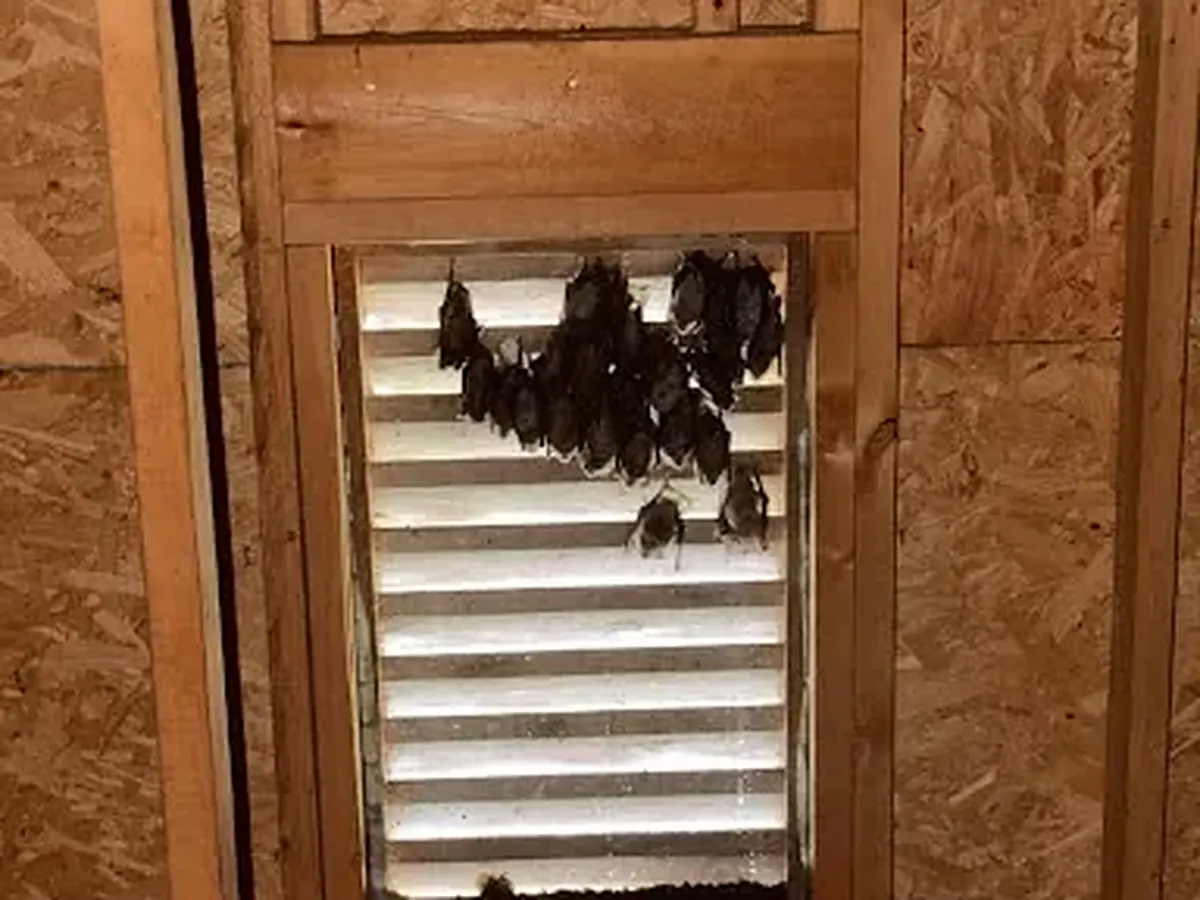
What a fall exclusion looks like
The sequence is the same as in any season: an inspection to find every entry point and the roost, one-way devices on the openings the bats use, sealing once they are confirmed gone, then cleanup and repair. The step-by-step walkthrough covers each stage. Afterward you get a short list of spots worth checking in the years ahead, and keeping bats out explains how to use it.
Why this isn’t a do-it-yourself job
Sealing a roost with bats inside, or trying to catch them, causes more trouble than it solves. Bats shut in can find their way into the living space, and handling one risks a bite. Old droppings carry health concerns as well; bats and disease explains what to do if you think someone was exposed.
Questions we hear
Is October a good time to get bats out of my attic?
Often, yes. By October the pups are flying, so a colony can leave without young being trapped. We use exclusion, not trapping, and we confirm the species first.
Can I wait until winter?
You can, but some bats, big brown bats in particular, may settle in to hibernate in the house. Working in October usually catches the colony before that and leaves months to finish repairs.
What if the inspection finds hibernating bats?
Then the plan changes. A hibernating bat is never sealed inside, so the work waits until the bats are active and can leave through a one-way device.
How much does a fall bat exclusion cost?
It depends on how many openings the bats use, how high and hard to reach they are and how much cleanup the attic needs. The price is set after we have seen the roofline; the cost guide explains the factors.
Will the bats come back next spring?
Not if every opening stays sealed. A yearly look at the roofline catches new gaps before bats do.
Request an inspection
Get the bats out before winter
Booking early in the season leaves time to finish every repair before the cold sets in. Describe the droppings or the dusk activity you noticed.