
By Zakk Moorman, Wildlife Biologist · Updated November 2026
Keeping Bats Out After They Have Been Removed
The bats are out of the attic and you want them to stay out. The space that suited a colony once is still warm and sheltered, so the job only holds as long as every way back in stays closed.
Moorman’s Wildlife Management & Pest Control handles bat removal and exclusion for homeowners around Roanoke, Bedford, Forest and Smith Mountain Lake, and finishes with roofline protection. This guide covers what keeps a house closed to bats and when to take a second look. If you think they are getting back in, call (540) 494-8278.
Why removal alone doesn’t last
Attic colonies are usually mothers and their young, and one open gap is all they need. If a gap at the roofline stays open, or a new one opens as the house ages, the attic is just as inviting next season. Closing every entrance is what keeps bats out; the rest of this page is about keeping those entrances closed.
What a finished exclusion looks like
Knowing how the job was done tells you what you are protecting.
- Every entry point was found. The openings were confirmed by watching the bats exit, then by a close look at the roofline.
- The bats left on their own. A one-way device on the main opening let them fly out but not back in.
- Every opening was closed after the colony was out. Quarter-inch hardware cloth went over larger holes and louvered vents, caulk into narrow cracks, and the last opening was sealed once the device came off.
- The timing followed the rules. See bats in October for why fall works well and the walkthrough for the full order of work.
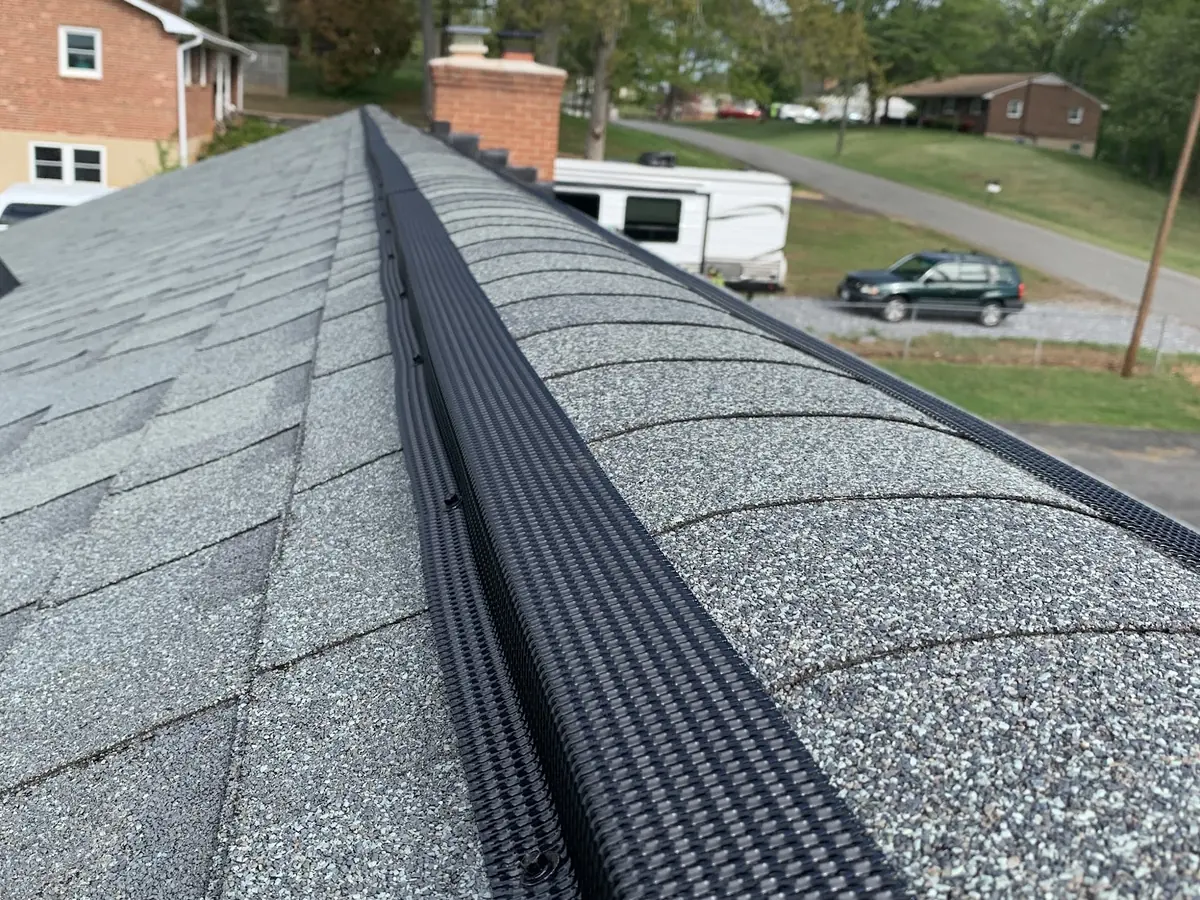
Clean up and restore the attic
With the colony gone and the openings closed, the mess can be dealt with: droppings removed, the area sanitized and soiled or packed-down insulation replaced. That part belongs to a trained crew with the right gear, so please don’t do it yourself. A clean attic also makes the next check easier, because fresh droppings stand out. See bat guano cleanup and attic restoration.
A simple yearly routine
Wood moves, caulk ages and storms damage trim, so a sealed house still needs a look now and then. Twice a year works: late winter, before bats come back, and again in fall. Add a check after any storm that damages the roof or siding.
From the ground, look over the roofline, vents and chimney, including any chimney cap. A lifted vent screen or cracked caulk is easy to catch early and is how a missed gap usually shows itself in the first year.
Signs a bat may be back
- Fresh droppings on the attic floor, a windowsill or the ground under a roofline gap
- New dark staining around a vent, the chimney edge or a trim joint
- Squeaks or rustling behind a wall or ceiling near dusk and dawn
- A bat seen entering or leaving the house in the evening
If you notice any of these, write down what you saw and when, and call us rather than heading into the attic. Don’t block the opening yourself. A bat sealed in can end up in the living space.
Questions we hear
Can bats get back into a house that was sealed?
Only if a new gap opens. A sealed house still needs the occasional look at the roofline, vents and chimney, and new openings get closed as they appear.
How often should I check the house after bat removal?
Twice a year, in late winter and again in fall, plus after any storm that damages the roof or siding.
I hear noises in the attic again. What should I do?
Note when and where you hear them, keep out of the attic and let us look first. Don’t seal anything yourself.
Can I put up a bat house instead of sealing?
A bat house away from your home can give displaced bats somewhere nearby to roost, but it works alongside a sealed house, not in place of one.
Request an inspection
Think the bats are back?
Tell us what you found and where: droppings, a stain or a gap at the roofline. We will look the house over again.