
Groundhogs in Virginia: Identification, Burrows and Signs
A wide hole with a pile of fresh dirt beside your deck or shed is the most common way people meet groundhogs in Virginia. Also called woodchucks, these big burrowing rodents are at home wherever woods meet open ground. This guide shows how to recognize one, read its burrow and judge when it is a problem. If one has dug in near your foundation, call Moorman’s Wildlife Management & Pest Control at (540) 494-8278 or request an inspection.
Need the animal gone rather than identified? See our groundhog removal service.
How do I know it is a groundhog burrow?
Groundhogs usually avoid people but can bite or scratch if cornered. Their burrows can undermine foundations, sheds and patios.
How to Identify Groundhog Activity
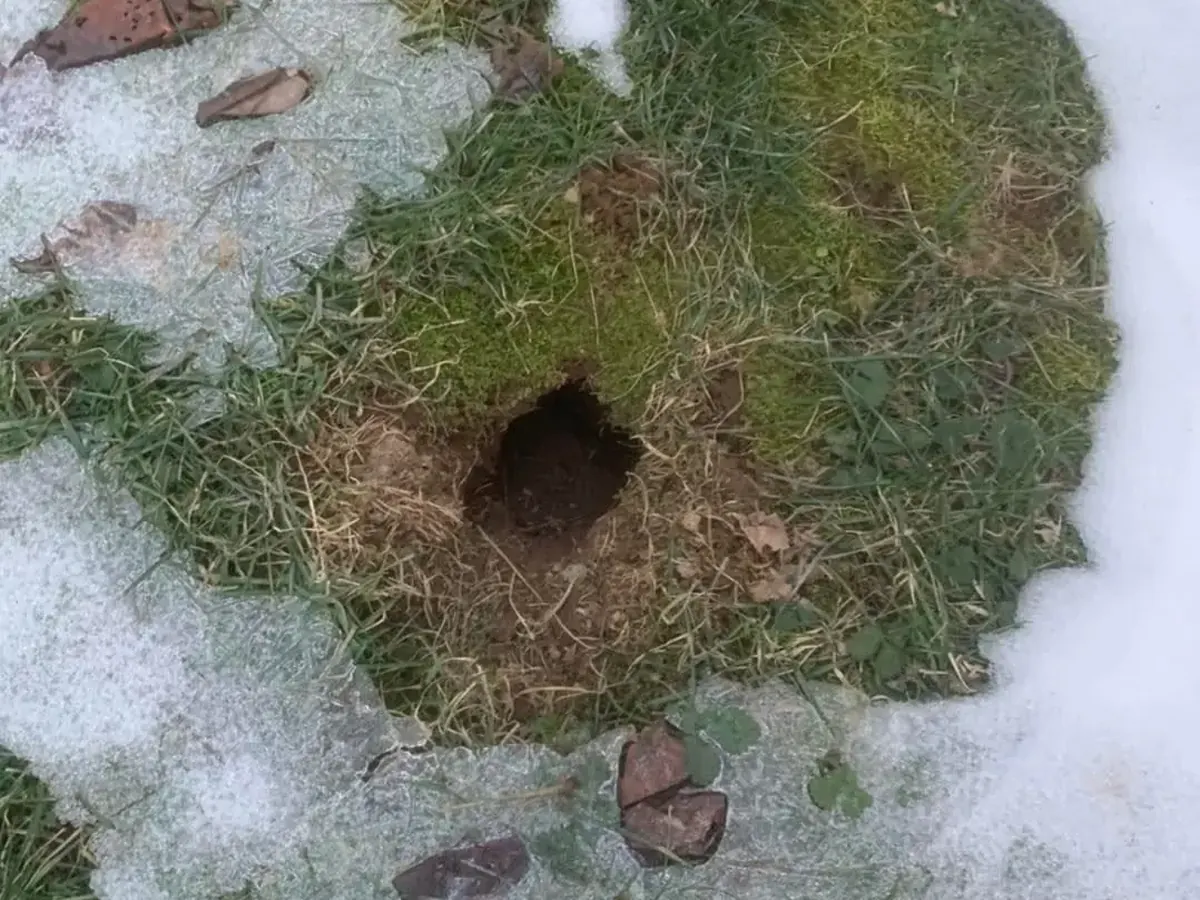
The burrow itself is the main clue: groundhog burrows commonly have a large, obvious main entrance, often around 10 to 12 inches across, with a mound of excavated dirt at the opening, plus one or more smaller, less obvious secondary entrances. Burrow size varies, and skunks, opossums and other animals sometimes reuse abandoned groundhog burrows, so a hole alone does not identify the animal. Groundhogs and skunks are separate species with different removal needs. A burrow found near a deck or foundation should not be assumed to have only one opening.
Quick Facts
| Type | Mammal (large ground squirrel/marmot) |
|---|---|
| Common VA species | Woodchuck / groundhog |
| Size | 16 to 27 in. including the tail; usually 5 to 10 lb, up to about 14 lb |
| Color | Grizzled brown-gray |
| Active season | Late Feb or Mar to Oct or Nov (true hibernator in winter) |
| Where found | Under decks, sheds, foundations |
| Main problem | Burrow-related structural undermining |
| Litters per year | 1 |
| Entry gap needed | N/A: digs its own burrow |
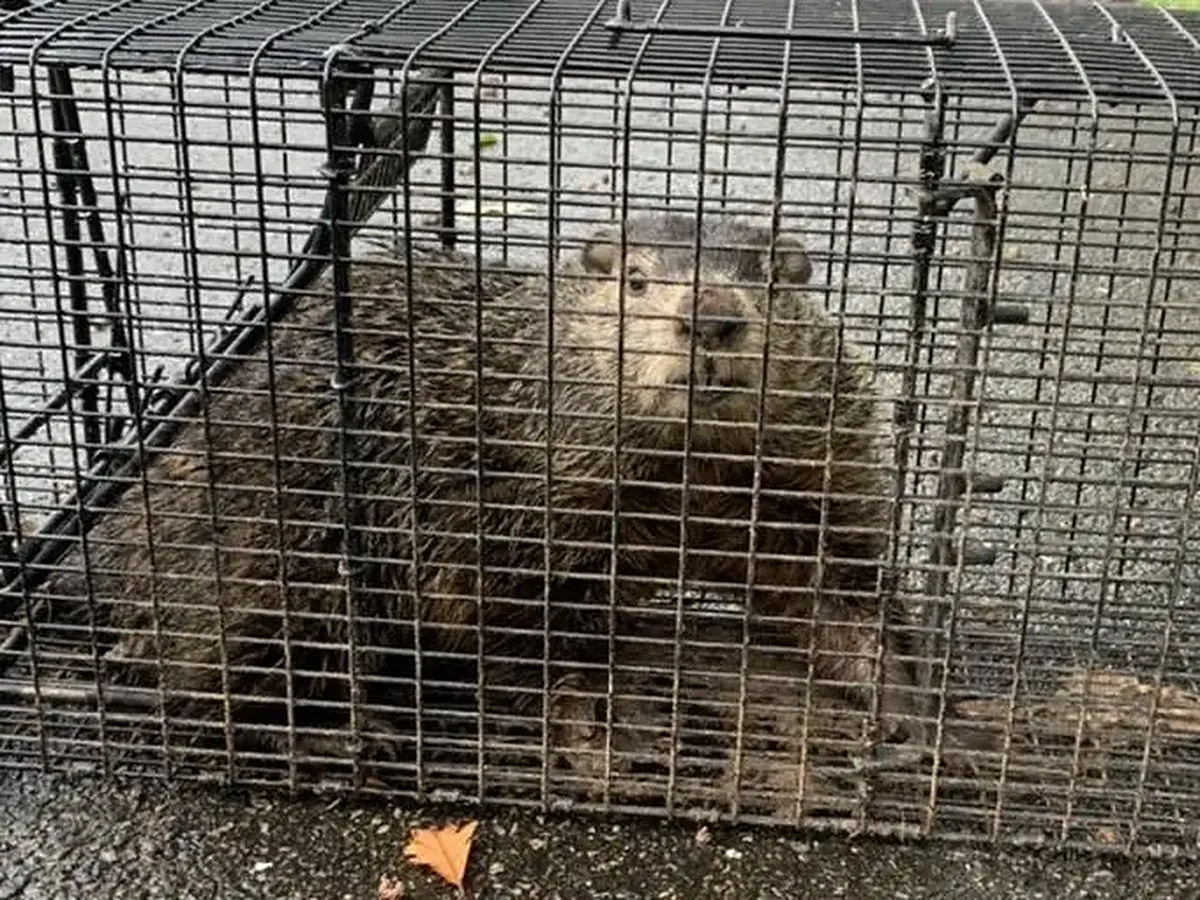
Common Signs of Activity
- A large burrow entrance, often around 10 to 12 inches wide, with a dirt mound at the opening (size varies, and other animals may reuse a burrow)
- A second, less obvious entrance nearby, often without a mound (a possible escape or secondary entrance)
- Extensive feeding damage to garden vegetables and ornamental plants
- A groundhog seen sunning near a burrow entrance during the day
- Soft or sunken ground near a deck, shed or foundation, which can indicate tunnel voids beneath and should be checked
Where Groundhog Burrows Are Commonly Found
Under decks, sheds, porches, and along foundation lines, especially where soil is soft and there is nearby vegetation for food and cover. A burrow system can extend several feet underground and several yards laterally in some cases, which is why burrows located directly under or beside a structure’s foundation can be a structural concern.
Life Cycle, Behavior, and Seasonality
Groundhogs are true hibernators, unlike most Virginia wildlife, and spend the winter months dormant in a dedicated hibernation burrow, often separate from their summer burrow.
| Time of year | What happens |
|---|---|
| Feb to Mar | Emerge from hibernation; breeding season |
| Apr to May | Young are born in April and stay in the burrow for six to seven weeks |
| Jun to Aug | Peak feeding activity and garden damage |
| Sep to Oct | Heavy feeding to build fat reserves for winter |
| Nov to Feb | True hibernation: largely dormant underground |
Property Damage and Safety Considerations
Structural undermining is the main risk. A burrow system beneath or beside a deck, shed or foundation can compromise footing stability over time, and the branching tunnel structure means the visible entrance is rarely the whole story. A groundhog issue near a structure should be assessed for the full extent of the burrow.
Garden and landscape damage is typically the first sign homeowners notice, well before any structural concern becomes apparent.
What Property Owners Can Do
- Do not seal a burrow entrance without confirming the animal has left, no young are present and the tunnel extent is known
- Remove brush piles and dense cover near foundations that provide burrow concealment
- Address burrows near decks or foundations promptly, before tunnels extend further
- Do not attempt to flood or gas a burrow yourself. These methods may not work and can create hazards for people, pets and other wildlife
When Professional Service Is Appropriate
Professional removal and full burrow assessment near decks and foundations.
Groundhog Removal
Wildlife Exclusion
Helping reduce the chance of new burrows starting near vulnerable structures.
Signs a groundhog lives on your property
The burrow
Adults dig the large burrow systems, and they are big projects. A system can run 25 to 50 feet long and reach 3 to 5 feet deep. The main entrance has a growing mound of dirt, sometimes called the porch.
Hidden escape holes
Groundhogs also dig smaller escape holes from underneath. These have no dirt pile and are usually tucked into thick brush, debris or a gap under a structure, so they are easy to miss.
Favorite spots in a yard
Around homes, groundhogs often dig beside or under sheds, barns, garages and houses. Raised decks with lattice skirting are a favorite place to tunnel under.
Eaten plants
They feed on green, leafy plants and love beans, peas, carrots, soybeans and other garden crops. Chewed-down rows in a vegetable garden next to a fresh burrow point clearly to a groundhog.
Daytime sightings
Unlike most nuisance wildlife, groundhogs move around in daylight. In spring they feed at midday, and in the heat of late summer they shift to early morning and evening.
Why groundhog burrows matter
A burrow is more than a hole in the lawn. Tunnels can undermine sidewalks, patios, retaining walls and the edges of buildings. On farms and large lots, hidden holes can hurt horses and riders and damage mowers or equipment that drop into them.
Groundhogs also carry parasites that can be shed in their droppings. Keep children and pets from digging around an active den. Rabies is uncommon in groundhogs, but a groundhog that stumbles or acts oddly tame should be left alone.
An empty burrow does not stay empty for long. Foxes, skunks, weasels and rabbits all move into old groundhog tunnels, so closing them properly matters. If you are not sure which animal is using a hole, our skunk guide may help.
Where groundhogs settle in Southwest Virginia
| Season | What groundhogs are doing |
|---|---|
| Late October to early November | Most enter hibernation in an underground chamber |
| February to early March | They wake up; males come out first |
| Early spring | Mating season, the only time adults share space |
| April | One litter of 2 to 6 young, usually about 4 |
| Late May to June | Young first leave the burrow at 6 to 7 weeks |
| Summer | Young head out to find their own territory around 3 months old |
Around Smith Mountain Lake and in the farm country of Franklin and Bedford counties, groundhogs thrive where woods meet open fields, pastures and big lawns. In Roanoke and Salem neighborhoods, they tend to settle along wooded edges and under decks and sheds. For lake properties, see our page on groundhog removal at Smith Mountain Lake.
Preventing groundhogs from coming back
A well-built barrier is the long-term fix around decks, sheds and gardens.
- Use wire mesh with openings smaller than 2 inches
- Make garden fences 3 to 4 feet tall and leave them a little loose so they are hard to climb
- Bury the bottom at least 1 foot deep, with 8 to 10 inches bent outward in an L shape
- Bend the top foot outward at an angle to stop climbers
- Clear thick brush and weeds that give groundhogs cover near the house
Scare devices, lights and noisemakers usually work only for a short time, because groundhogs get used to them.
Related Projects and Guides
Request an inspection
Think You Have Groundhogs?
An inspection can help identify what is behind groundhog burrows and the options for dealing with it.
Send us the details
Thank you, we have your request
We will call or write back to set up your inspection. If it cannot wait, call (540) 494-8278.