
By Zakk Moorman, Wildlife Biologist · Updated November 2026
What Happens During a Bat Inspection
Wondering what happens during a bat inspection before you book one? In short, we look over the whole house, inside and out, to find where bats are getting in, what kind they are and when they can be sealed out. Moorman’s Wildlife Management & Pest Control does these inspections in the Roanoke area, at Smith Mountain Lake and in nearby towns as the first step of bat removal. Call (540) 494-8278 to schedule one.
Each part of the visit is below, so you know what to expect.
Why the inspection comes first
Bats can’t be trapped out of a house or chased off with lights. They leave through one-way exits placed over the exact gaps they use, and every other gap has to be closed too. If one opening is missed, bats that find their usual exit blocked can switch to it.
The inspection is how all of those openings are found. It also shows whether there are young in the roost, which decides when the work can start.
Part 1: the outside of the house
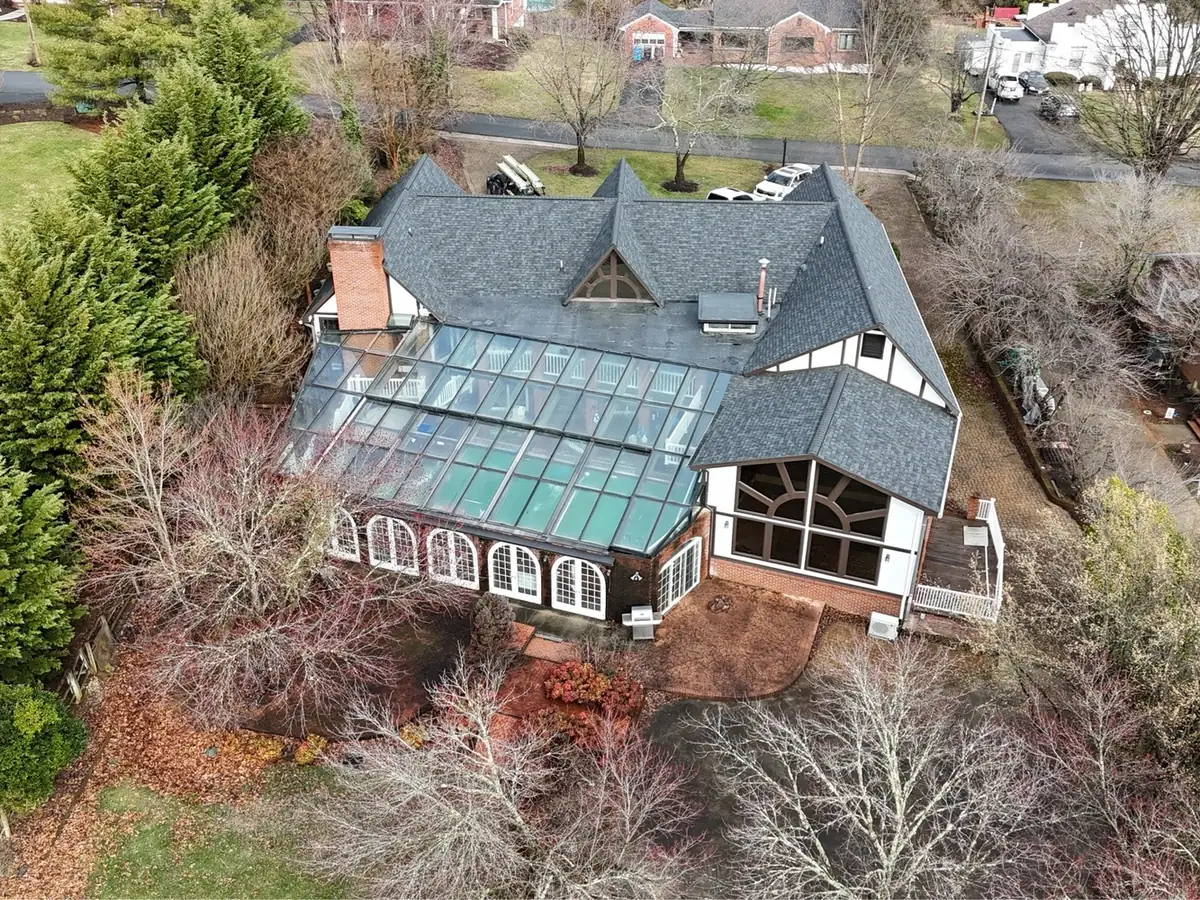
Most of the visit happens outdoors. We walk all the way around the home and look closely at every place where two parts of the house meet. Bats don’t chew new holes, so we are hunting for gaps that already exist. We check:
- Roof edges. Where the roof meets a wall, and along the fascia and soffit.
- Gables and vents. Louvered gable vents, ridge vents and soffit vents with torn or missing screens.
- Chimneys. Flashing, mortar and the top of the flue.
- Trim and siding. Corners, shutters and joints where boards have shrunk.
- Add-ons. Porch roofs, dormers, garages and additions tied into the main house.
At each spot we look for what bats leave behind: droppings on the ground or ledges below, smooth dark rub marks around a gap and spotting on siding or windows.
Part 2: inside the attic
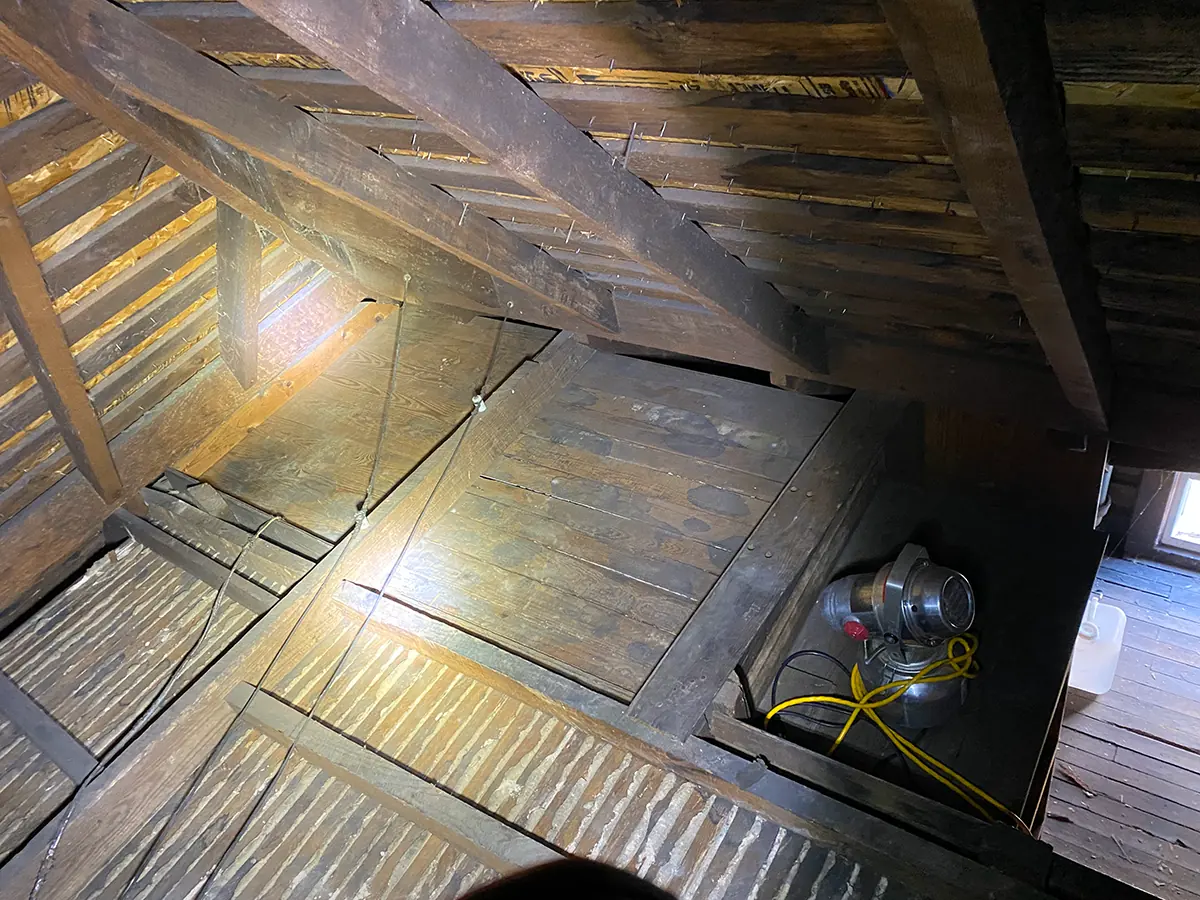
Next we go into the attic, if it can be reached safely, and look for:
- Guano on insulation, beams or the floor
- A strong, musty or acrid smell
- White, crusty urine stains on wood
- Daylight showing through gaps at the eaves or gable ends
- Bats roosting in sight, usually high near the peak where it is warmest
We also note how much insulation is soiled, since that affects cleanup later. Crushed bat droppings fall apart into powder flecked with insect parts, which sets a roost apart from mice, whose droppings are harder. The droppings guide compares them.
Part 3: finding the active exits
Sometimes the active exits are obvious. When they aren’t, the house may need watching as bats come out to feed, starting around sunset and continuing for about half an hour. Finding every exit can take more than one evening, and a second person watching another side of the house helps. The dusk watch can also give a rough idea of how many bats are using the house.
Part 4: which bat, and are there young?
Several Virginia bats are endangered, so we identify the species in your home. Big brown bats are common across the state and often roost in buildings, but little brown and evening bats use houses too; the bat guide describes them.
We also look for signs of pups. Young bats can’t fly for their first few weeks, and sealing a house while they are inside would trap them, so the sealing date is planned around when the young can fly on their own.
Part 5: what you are told before we leave
- Every active gap, and every possible one that should be sealed
- Which species is roosting and whether young are present
- When the one-way exits can go up
- What repairs are needed to vents, trim, flashing or the chimney
- Whether guano and insulation need to come out
How long it takes, and what comes next
A small one-story house can be done fairly quickly. A tall home with several gables, a chimney and a hard-to-reach attic takes longer, and an evening exit watch may be needed on top. What changes the price is covered in the cost guide.
Once you approve the plan, the one-way exits go up as soon as the timing allows. After the bats are gone, the last gaps are sealed and droppings are cleaned up. The exclusion walkthrough explains each step, and bat guano cleanup covers the cleanup.
Questions we hear
How do I know if I have bats before I call?
Watch the house at sunset and look for small shapes leaving the roof. Look for crumbly droppings piled under one spot, and listen for squeaks in the walls late in the day. Any one of these is reason enough to book.
Do I need to be home for a bat inspection?
We need access to the attic, so someone should be there or arrange access.
Can you inspect in winter?
Yes. Most bats have left by then, but droppings, stains and gaps are still there to find, and winter is a good time to plan sealing before bats return. Some big brown bats do winter in houses, so we check for them.
Will the inspection disturb the bats?
Not much. We look, listen and watch, and nothing is installed until the timing is right.
How often should I schedule a bat check?
Once a year is a good habit, and again if you see new gaps or bats at dusk. See why an annual bat check matters.
Request an inspection
Ready to find out what is in the attic?
Tell us what you have noticed and where. We look for every gap and give you a clear plan.